 WeeklyTrail
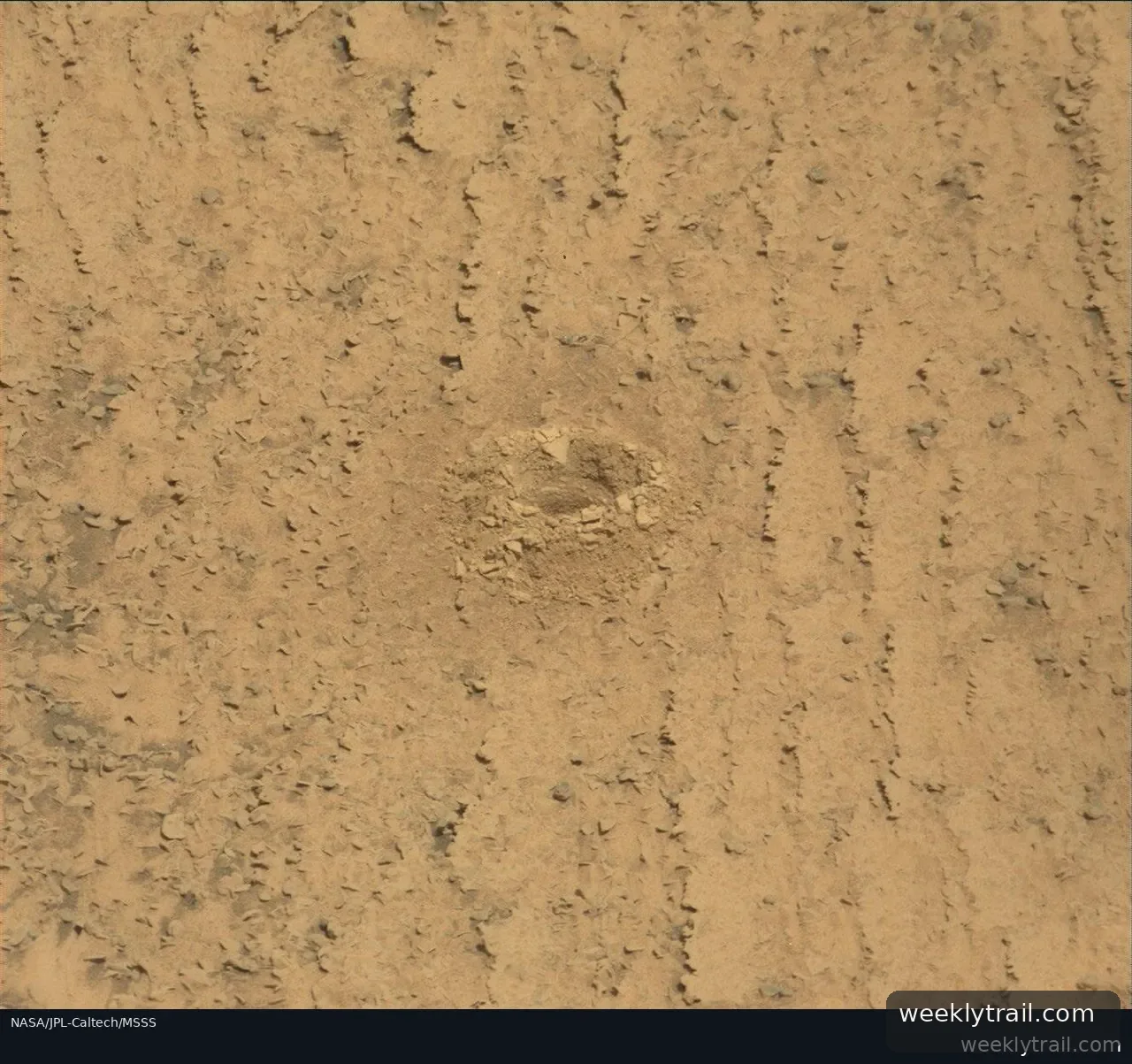
NASA’s Curiosity rover drilled its 49th hole, named Nazca, in a rock containing numerous disc-shaped features that researchers interpret as possible crystals. If confirmed, comparisons with crystals on Earth could help the team investigate past environmental conditions on Mars.
Before drilling, the team checked that the rover’s wheels rested securely on the ground and tested the rock’s stability under pressure from the drill. The APXS, MAHLI and ChemCam instruments also examined the target.
At the October 23 planning date, a sample had been delivered to CheMin and results were still being transmitted to Earth. Additional ChemCam measurements examined the drill tailings and the hole wall.


Start the conversation. A good question is half the story.