 WeeklyTrail
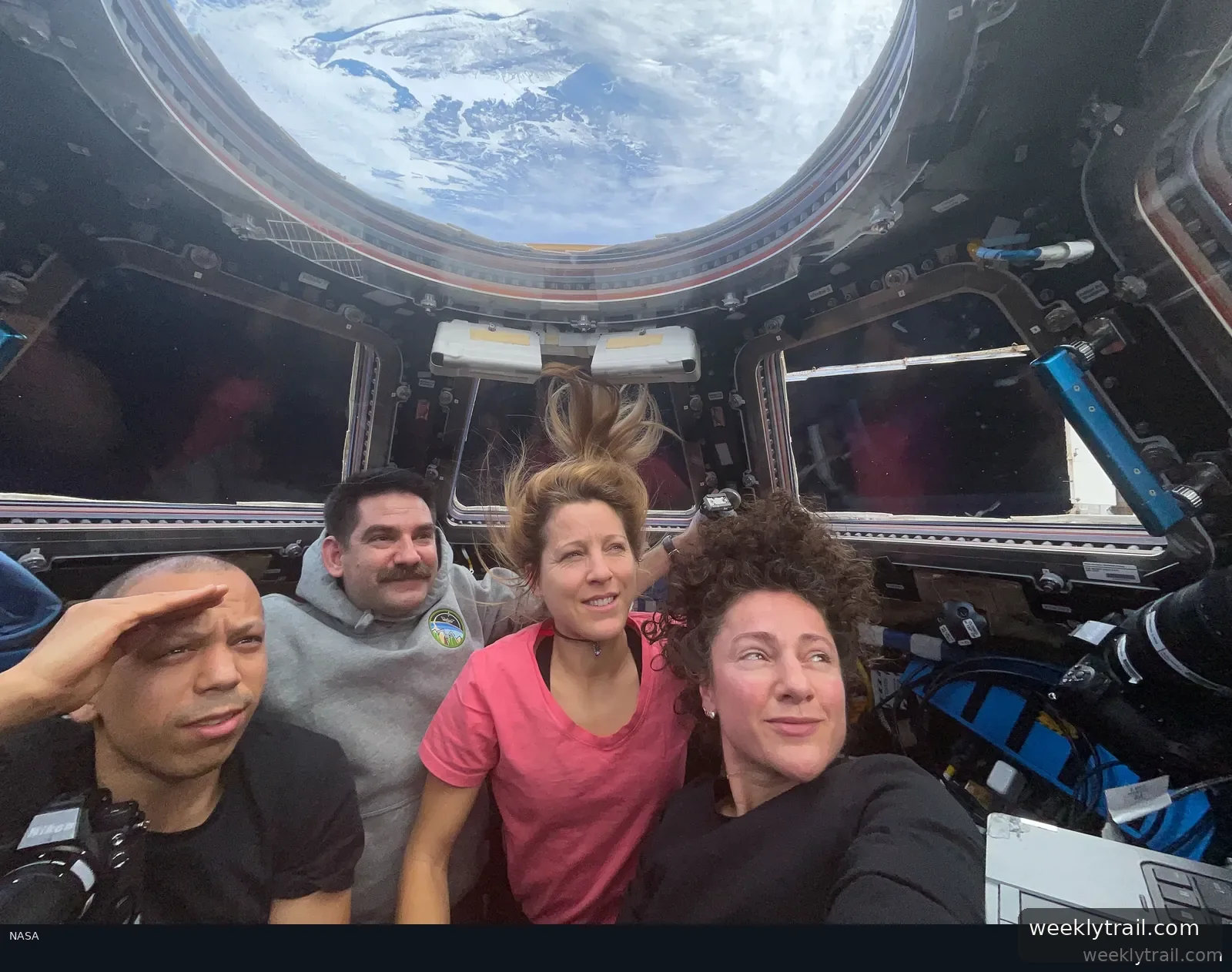
In a report published August 11, 2026, NASA described 2026 International Space Station research that it said supports preparations for missions to the Moon and eventually Mars. NASA noted that its Artemis II mission in April was the first crewed flight around the Moon in more than 50 years.
According to the agency, astronauts lose between 1% and 1.5% of bone density each month in microgravity. NASA described a compact European Enhanced Exploration Exercise Device now being tested aboard the station, along with investigations into producing intravenous fluids from the station's potable water supply and into robotic operations in microgravity.
Other experiments NASA listed study blood flow and clot risk, cardiovascular and respiratory changes tracked with a smart shirt, and meditation-based stress and sleep practices. NASA also cited a fiber-optic radiation dosimeter, research on cryogenic propellant tank pressure and evaporation, and a survey of antibiotic-resistant organisms on the station. NASA said space station science would continue through the remainder of 2026.


No comments yet.