 WeeklyTrail
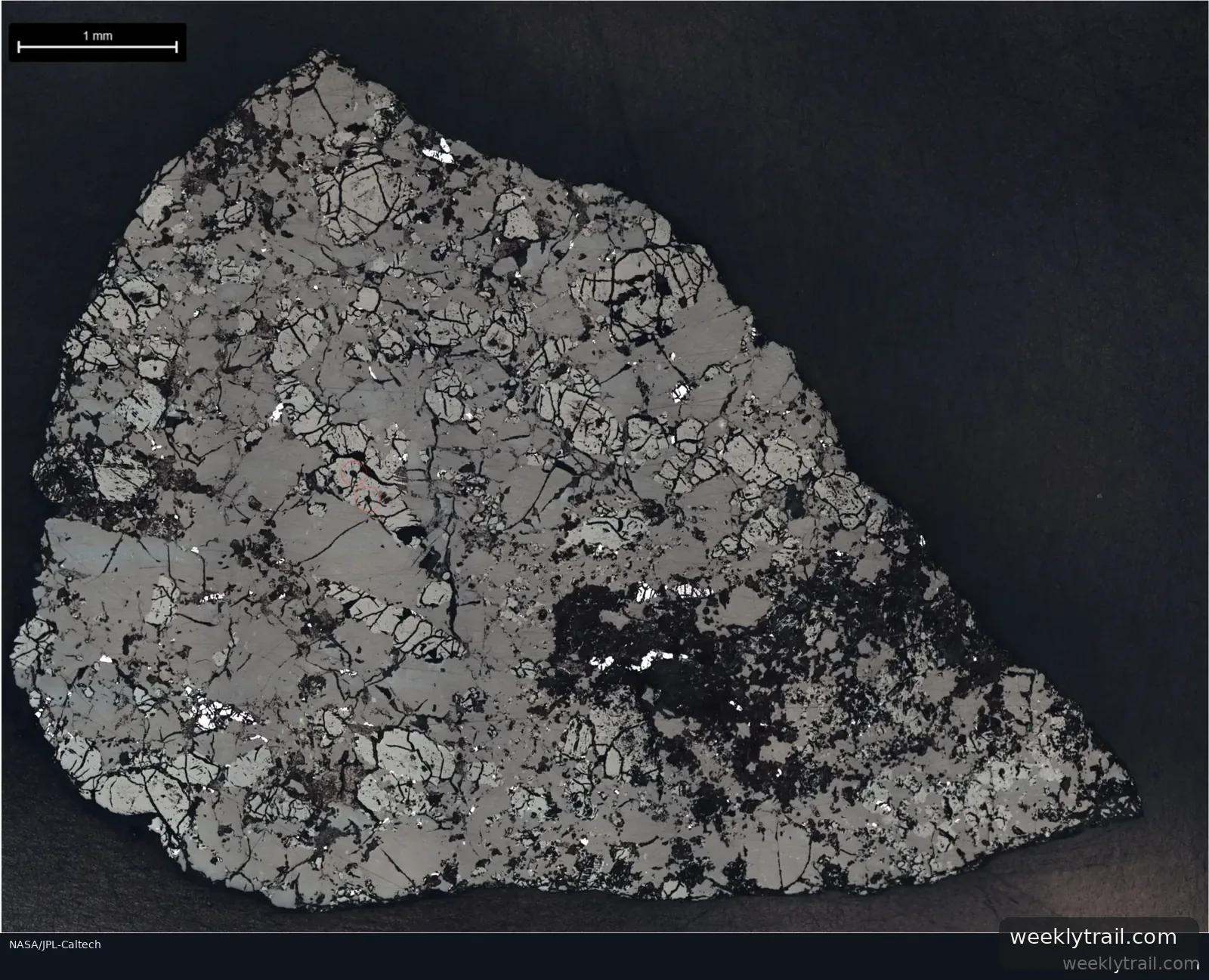
A nearly 2-pound (800-gram) rose-colored rock found in the Sahara Desert in 2022 is a piece of Mars that formed more than 4.1 billion years ago, according to a NASA-funded study. Named Teghaza 001 after the salt plain in Mali where it was discovered, the meteorite is one of roughly 435 known from the Red Planet.
In a paper published Thursday in Science, researchers offered an initial characterization of the meteorite, describing a mix of volcanic minerals that record how the planet's crust formed from cooling magma before being altered by subsurface water. The researchers found zircon crystals in the rock and used an in-situ rubidium-strontium dating method on a piece smaller than a fingernail. The results indicated the rock was altered by Martian water around 4.1 billion years ago, suggesting it formed even earlier. A separate paper published in Science Advances in June detailed the meteorite's water content.
Lead author Yang Liu of NASA's Jet Propulsion Laboratory said the team realized the meteorite was unique only after looking closely, noting that one reviewer called it a Rosetta Stone for Mars. The paper lists several potential origin locations, though the exact site will never be known. Liu said the research has only scratched the surface.


Start the conversation. A good question is half the story.