 WeeklyTrail
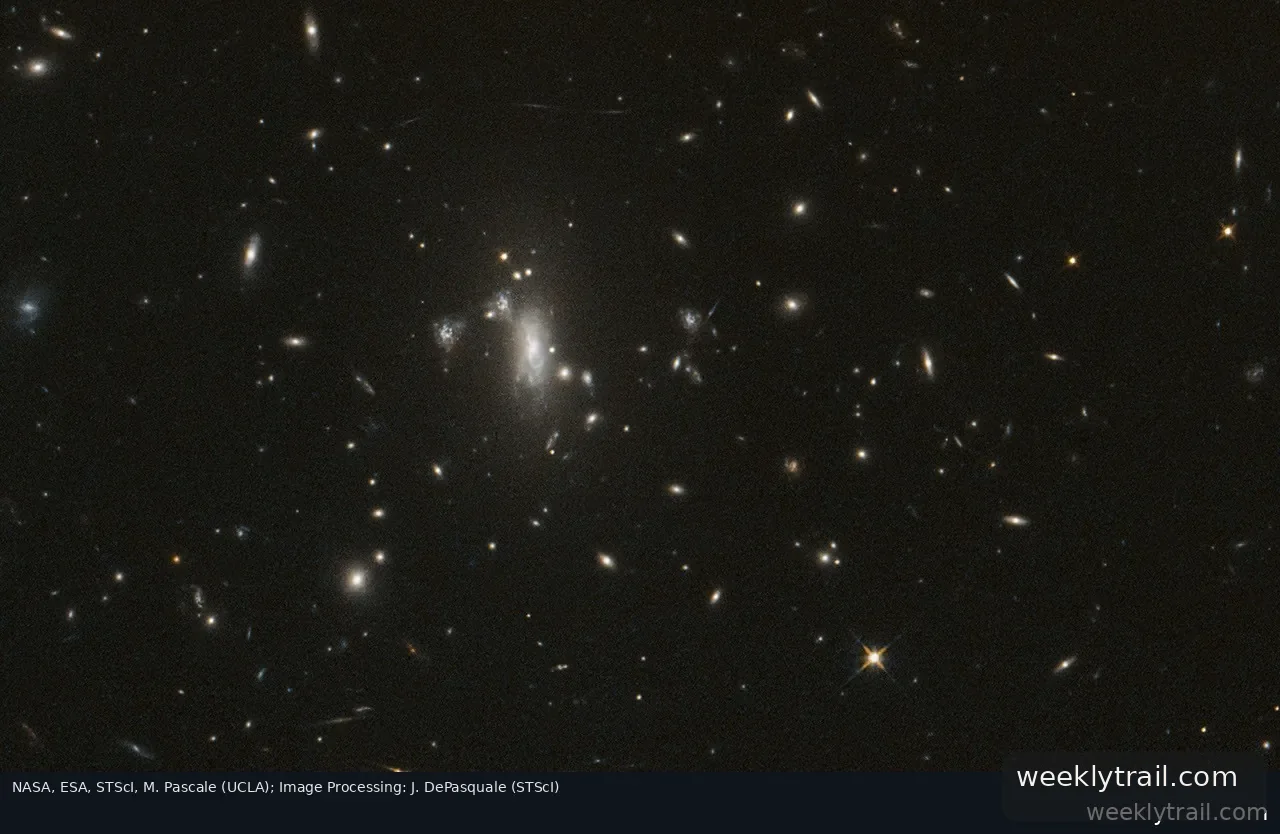
NASA reported on Sept. 23, 2026, that the Hubble Space Telescope completed its 200,000th orbit around Earth on Sept. 19, 2026. The agency said Hubble has traveled more than 5 billion miles over its 36-year lifetime and logged more than 1.7 million observations.
An observation completed on the day of the milestone targeted the Hubble Constant, the universe's expansion rate. It used the massive galaxy cluster MACS J0417 as a gravitational lens, which bends and magnifies light from objects behind it. Light from a supernova can arrive along multiple paths, making one explosion appear more than once, separated by months or years. Supernova Athena, discovered by the James Webb Space Telescope in 2025, was predicted at that date to reappear between then and early March 2027. Timing those reappearances could help map the cluster's mass and refine estimates of the expansion rate.
NASA said demand for Hubble time remains high, with astronomers requesting about seven times the available observing time each year. The agency said Hubble's ultraviolet and visible-light capabilities complement Webb and the Roman Space Telescope.


No comments yet.