 WeeklyTrail
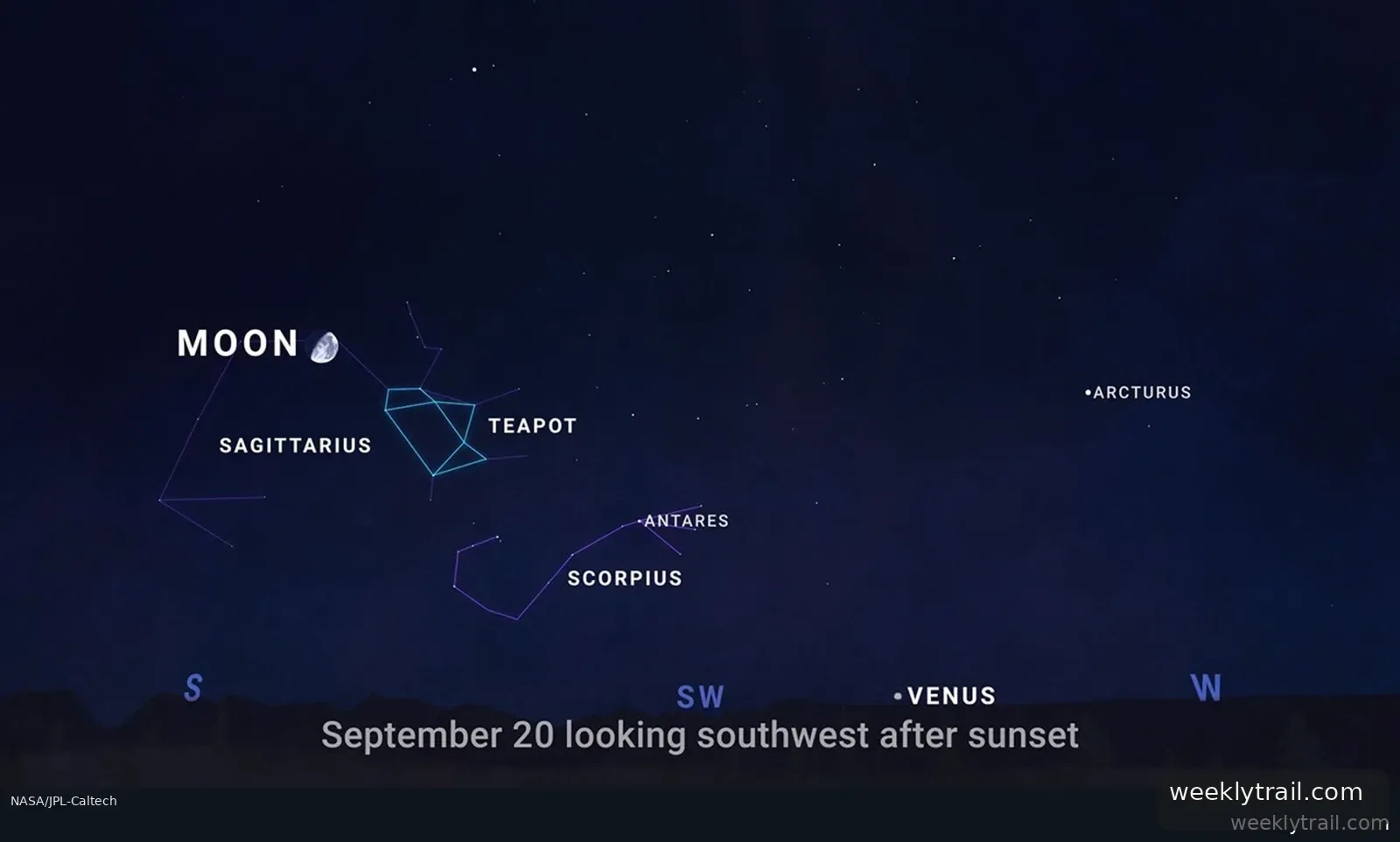
NASA's September 2026 skywatching roundup, published September 1, 2026, describes several events that were anticipated for that month. From September 14 through 20, about an hour after sunset, the Moon was set to pass near Antares, the reddish heart of Scorpius, and then near the Teapot star pattern in Sagittarius. Under especially dark skies, observers might have seen the hazy region toward the center of the Milky Way.
Venus was expected to reach peak brilliance for its evening appearance on September 18, standing low above the western horizon shortly after sunset. The September equinox falls on September 22, bringing fall to the Northern Hemisphere and spring to the Southern Hemisphere. September 19 was International Observe the Moon Night, with NASA inviting people worldwide to take part in events or observe from wherever they were.
On September 26, the Harvest Moon was set to rise in the east shortly after sunset near Saturn, with faint Neptune completing a wide triangle. NASA notes that Saturn is visible to the unaided eye, while Neptune, at around magnitude 8, requires binoculars or a telescope, with darker skies and good conditions helping. The guide also included the Moon's phases for September.


Start the conversation. A good question is half the story.