 WeeklyTrail
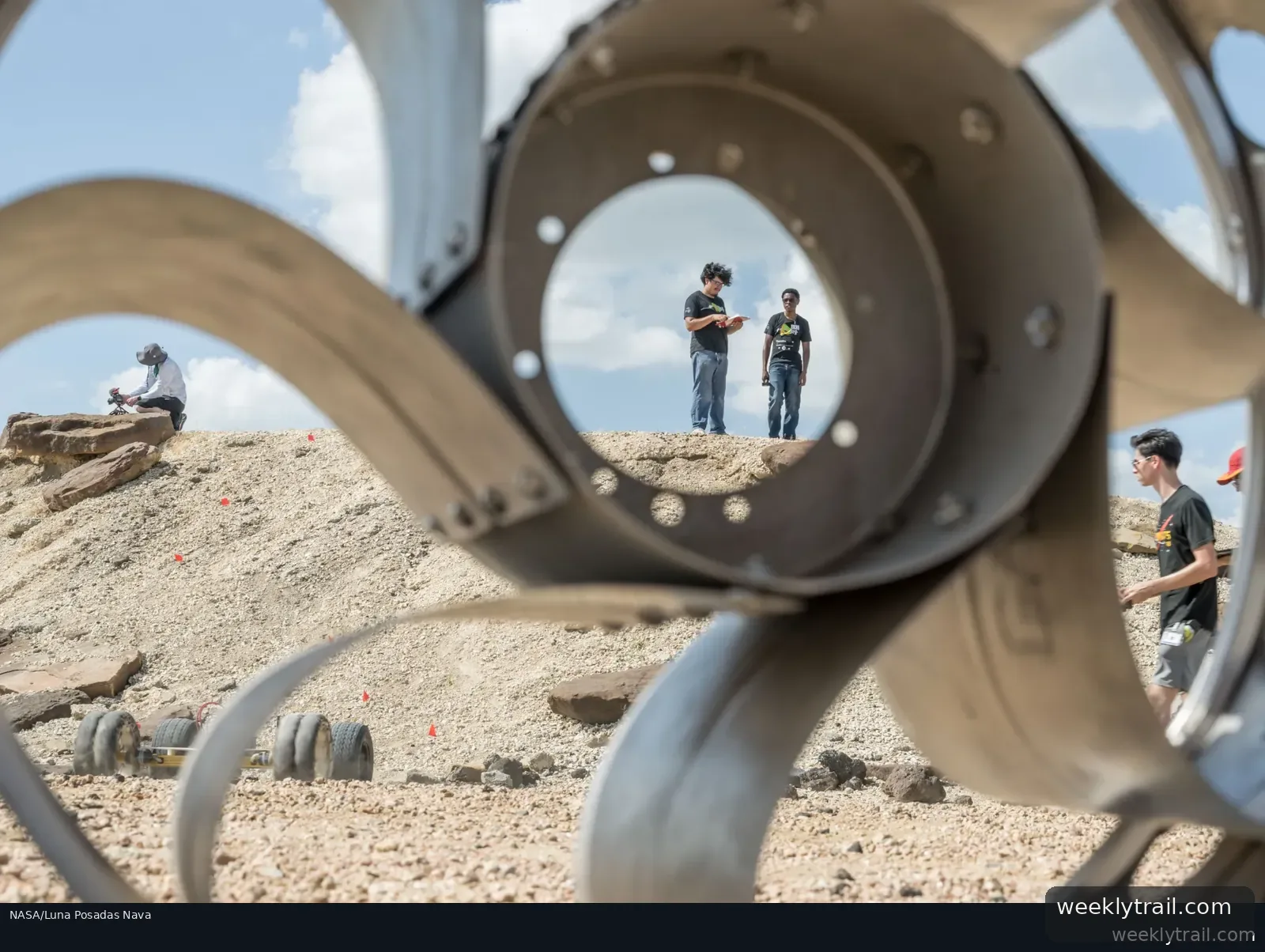
Five teams from 128 submissions and 49 countries reached the final phase of the Rock and Roll with NASA Challenge, which NASA reported on August 17, 2026, had tested their prototype lunar rover wheels on July 31 at the Johnson Space Center's Rock Yard in Houston. The competition sought lightweight, durable and scalable wheel designs that could absorb impacts, hold traction at higher speeds and withstand the lunar environment. The wheels were fitted to MicroChariot, a 45-kilogram test rover, and run through courses across different terrains.
The five finalists took distinct approaches. Hellenic Technology of Robotics SA's HTR Variable Flex Lunar Wheel uses an internal system to vary stiffness by terrain and vehicle needs. Hyperbola's Hiper Wheel relies on tensioned cables and a corrugated structure for spring-like flex. Huff Helo Inc.'s titanium sheet-metal wheel proved more rigid in testing, bouncing over some obstacles. The Payne Aviation Wheel combined a pneumatic approach with early automobile tire ideas. The winning Scotch Pad Tyres concept, from Australian mechanical engineer Daniel Bloomfield and his son Isaac, uses a Nomex-based tire structure on an aluminum hub with an epoxy and corundum grit outer surface.
NASA said a next phase could evaluate the wheels in thermal vacuum chambers and over longer distances, at different sizes and loads. The challenge was conducted by Johnson's Common Robotics Project, with NASA's Center of Excellence for Collaborative Innovation managing the contract and HeroX administering it.



Start the conversation. A good question is half the story.