 WeeklyTrail
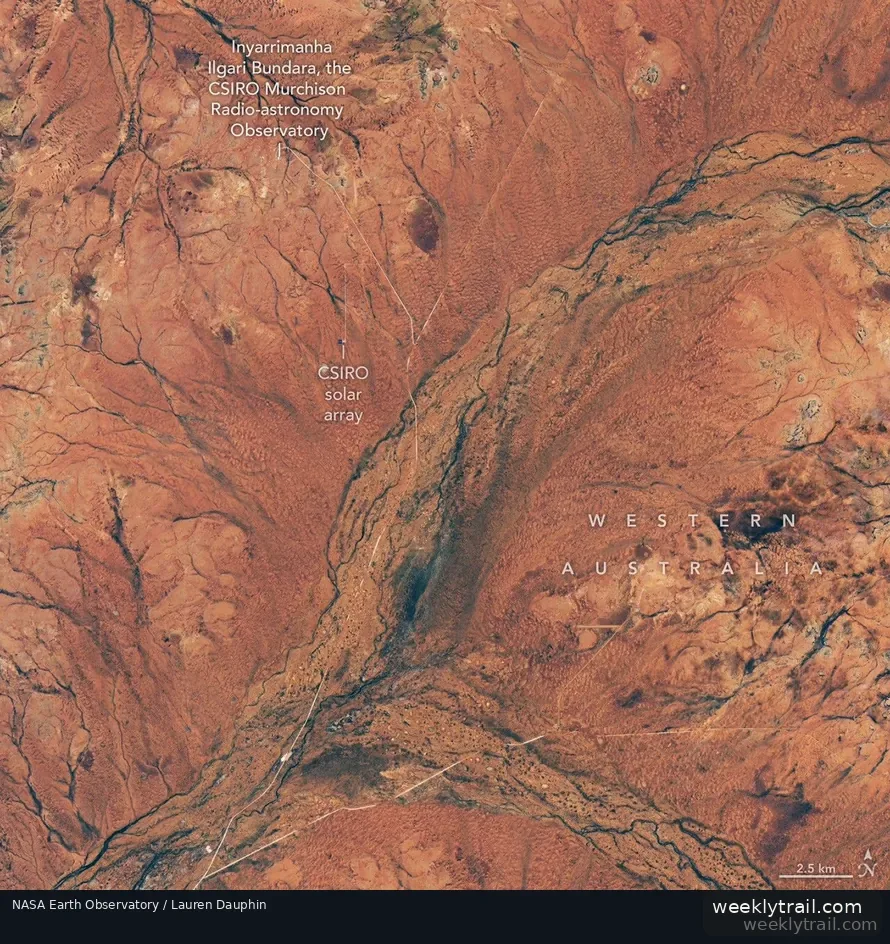
Arid shrublands in Western Australia's Murchison region produced a profusion of wildflowers in late austral winter 2026, according to NASA Earth Observatory imagery published September 23, 2026. The report says rainfall was above average in June and very much above average in August as several cold fronts moved through, waking dormant seeds in the soil.
Landsat 8 images captured with the OLI instrument compare the greener landscape of late August 2026 with a similar time in 2025, when conditions were drier. The area lies about 600 kilometers (370 miles) north of Perth and is one of Western Australia's main grazing regions, home to grasses, saltbush and the slow-growing mulga tree. Local experts cited by the observatory think the display could be the best the area has seen in nearly two decades. The flowers included some threatened species.
The blooms also appeared at Inyarrimanha Ilgari Bundara, the CSIRO Murchison Radio-astronomy Observatory, where CSIRO operates antenna arrays that observe the southern sky. The remote site sits in a "radio quiet" zone where communications and electronic devices are controlled to limit interference with the instruments. The observatory focuses primarily on deep space, though the flowers briefly drew attention underfoot.

Start the conversation. A good question is half the story.