


In a NASA report published Aug. 11, 2026, Expedition 75 crew members aboard the International Space Station carried out vein scans and spacesuit servicing, alongside Earth photography, cargo work and life support maintenance. Station commander Jessica Meir began her shift collecting blood samples in the Columbus laboratory module for the Venous Flow investigation into how microgravity affects the circulatory system, then spun and analyzed the samples in a centrifuge before stowing them in a science freezer.
NASA flight engineer Jack Hathaway operated the Ultrasound 3 device for the day's first vein scans, observing Meir's internal jugular veins and measuring her blood pressure. A second round of scans followed after lunch, with Meir, Hathaway and flight engineers Anil Menon of NASA, Sophie Adenot of ESA, and Pyotr Dubrov and Anna Kikina of Roscosmos taking turns on the device. Doctors on the ground monitored the scans in real time to assess the risk of blood flow anomalies and blood clots during spaceflight.
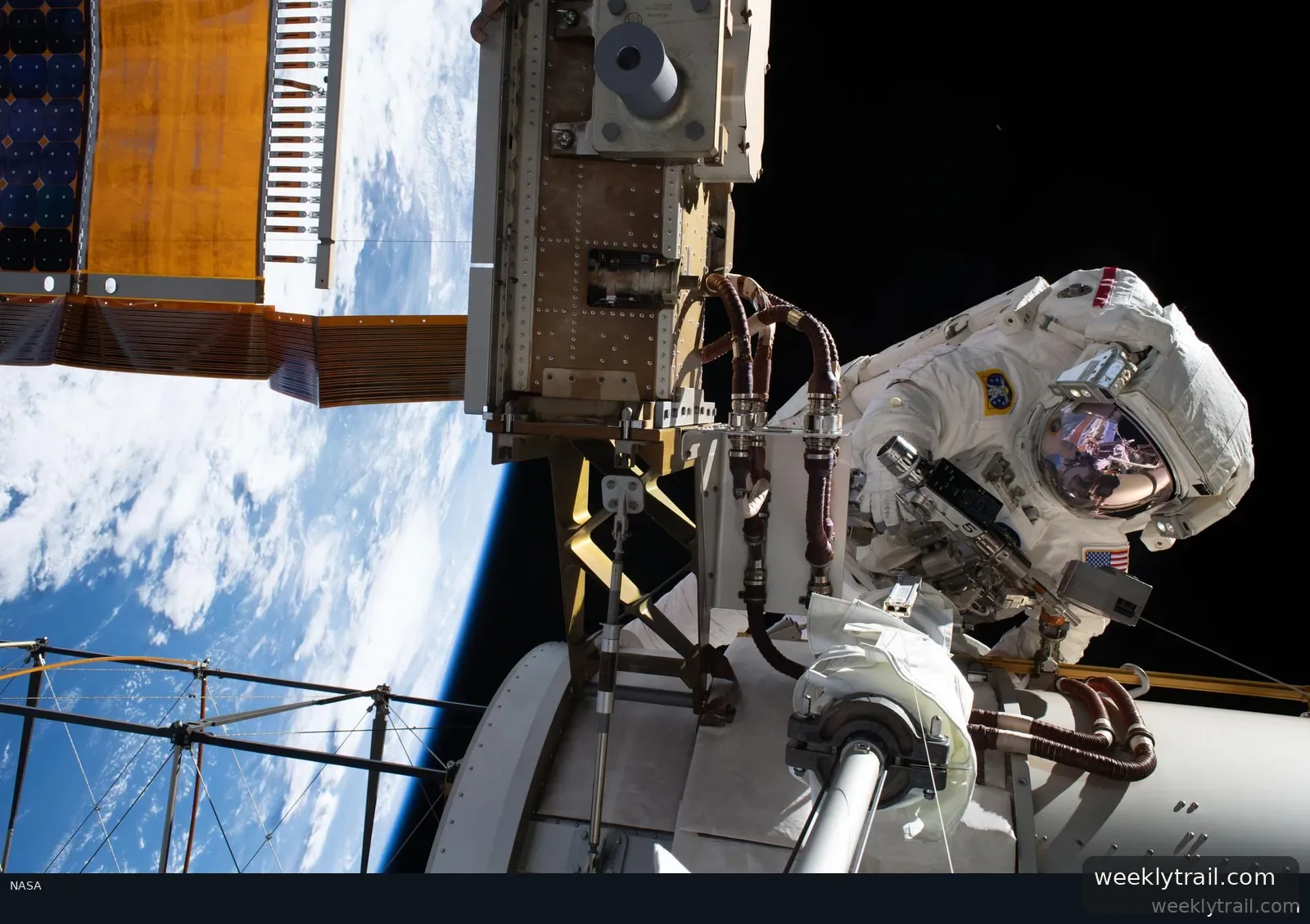
Hathaway, Menon and Adenot also serviced spacesuit gear in the Quest airlock ahead of a spacewalk planned for Tuesday, Aug. 18, when Menon and Adenot were to spend about six-and-a-half hours swapping out a high-speed data and communications antenna on the Z1 truss segment. Roscosmos flight engineer Andrey Fedyaev photographed landmarks across Africa and Eastern Europe before troubleshooting electronics and laptops in the Zarya module, while Dubrov cleaned smoke detectors in the Poisk module and loaded obsolete hardware into the Progress 94 cargo spacecraft for disposal when it departs in September. Kikina maintained the ventilation system in the Zvezda service module and cleaned areas behind panels inside Zarya.





No comments yet.