 WeeklyTrail
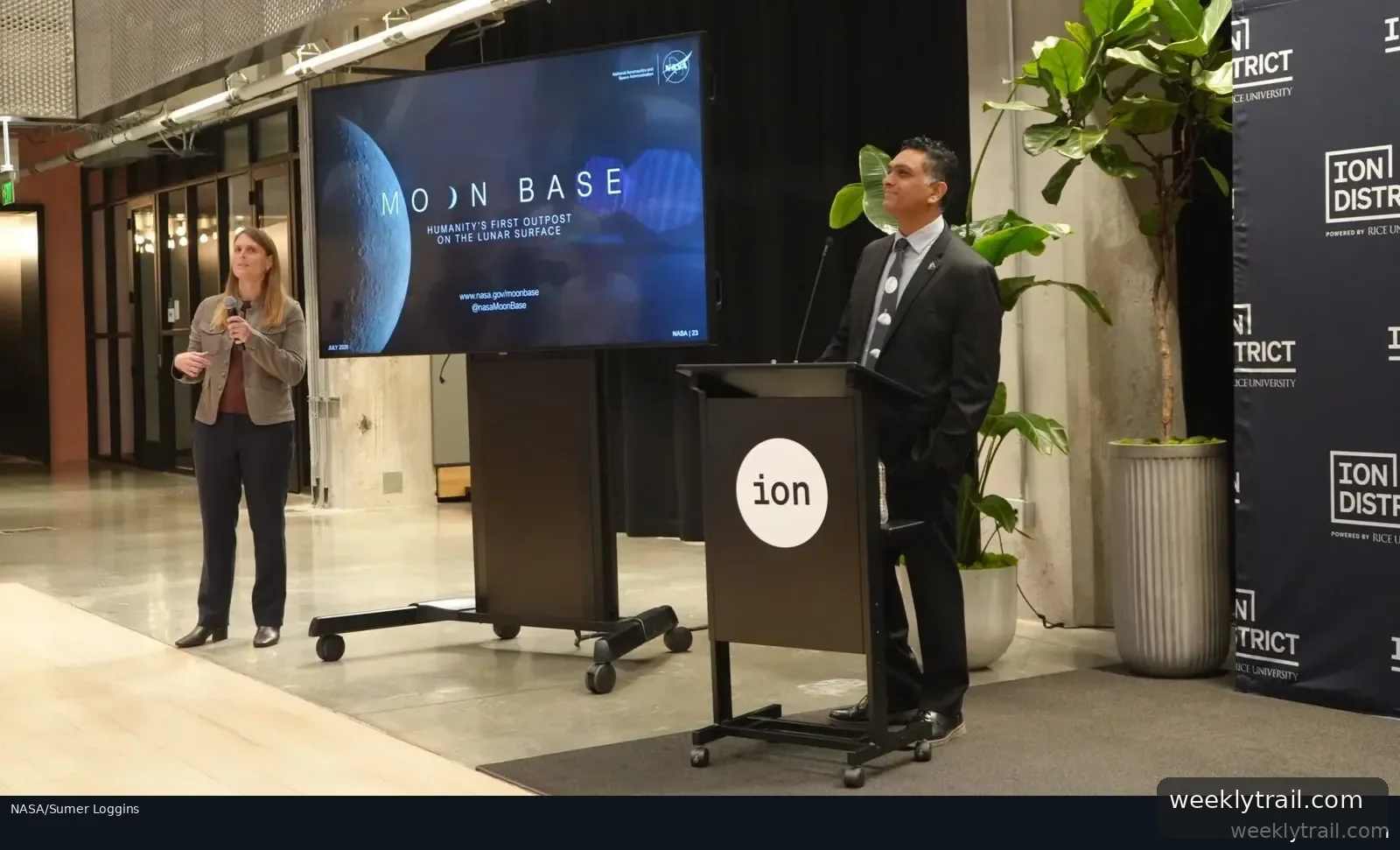
In a report published Aug. 11, 2026, NASA described a July 30, 2026 presentation in Houston by Shatel Bhakta, principal systems engineer for the agency's Moon Base Program. Speaking at NASA Stories at the Ion, Bhakta discussed the challenges of establishing a sustained human presence at the lunar South Pole, calling it "probably going to be the most challenging endeavor NASA has ever undertaken."
Bhakta outlined a step-by-step approach: early robotic missions and technology demonstrations would gather environmental data, test systems and reduce risk before infrastructure and human operations expand. He noted that unlike the Apollo landing sites, the South Pole region has steep slopes, deep craters and shifting lighting, with the Sun low on the horizon. That could leave solar panels without sunlight for extended periods and complicate navigation. Rugged terrain may also block line of sight to Earth, requiring relay communications. Lunar regolith, or Moon dust, remains a major challenge because it could damage equipment and spacesuits and pose health risks.
Bhakta said Moon Base may not be a single connected cluster, since terrain, lighting, power and landing constraints could require habitats and systems to be distributed. Permanently shadowed regions may hold water ice and other volatile materials that could support exploration, though using them would require new mobility, power and processing systems. NASA said multiple solicitations for industry and international collaborators were open at the time.


Start the conversation. A good question is half the story.