 WeeklyTrail
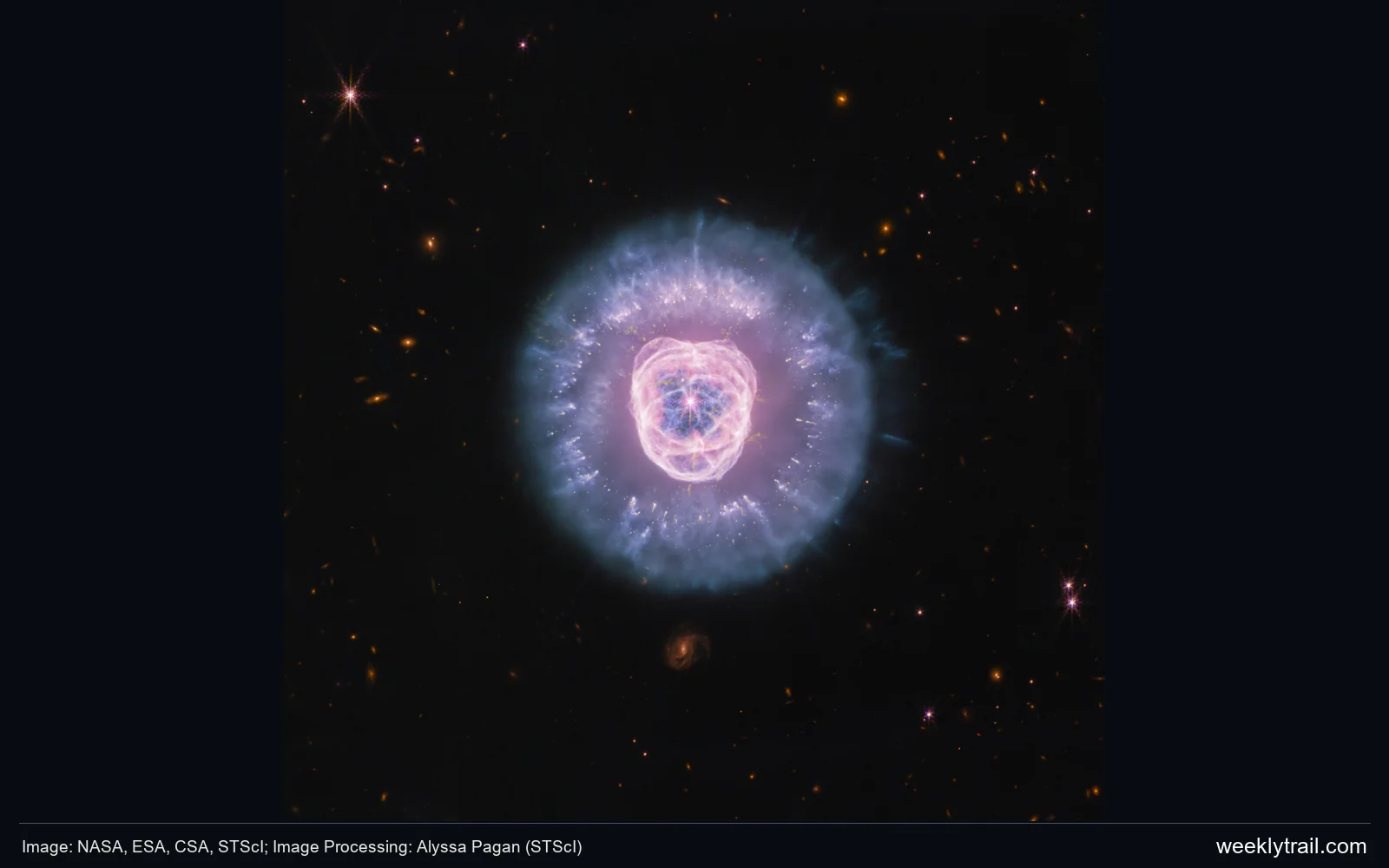
NASA’s August 10, 2026 article presents infrared observations of NGC 2392, known as the Lion Nebula. The James Webb Space Telescope used its NIRCam and MIRI instruments to distinguish compact dust structures and ionized gas in material shed by a dying star.
A hot white dwarf remains at the centre. Its radiation changes the surrounding debris: a gas bubble expands and destroys some dust along its path. Denser clumps survive and shelter material behind them, producing elongated features.
Hubble previously observed the nebula in visible light. Webb’s infrared view provides a more detailed look at its components while their evolution continues. NASA reports an estimate that the nebula could disperse in roughly 10,000 years. That describes its possible future, rather than a completed event. The complex arrangement of rings and shells remains an active question for researchers.


Start the conversation. A good question is half the story.