 WeeklyTrail
Astronomy Picture of the Day Shows Ganymede Briefly Hiding Io
A video featured as NASA's Astronomy Picture of the Day captured Ganymede passing in front of Io on October 20, 2026, an event known as a mutual occultation of Jupiter's moons.

A video featured as NASA's Astronomy Picture of the Day captured Ganymede passing in front of Io on October 20, 2026, an event known as a mutual occultation of Jupiter's moons.
A technician inspects the large sunshade for NASA's NEO Surveyor mission, a structure designed to keep the infrared space telescope cool while it searches for near-Earth asteroids and comets.
A Rice University intern reflects on how a Johnson Space Center guidance and navigation engineer mentors interns while they work on tools for the U.S. Deorbit Vehicle and Orion docking systems.
NASA's Astronomy Picture of the Day for October 27, 2026 shows blue noctilucent clouds above a field near Linköping, Sweden, captured in early August.

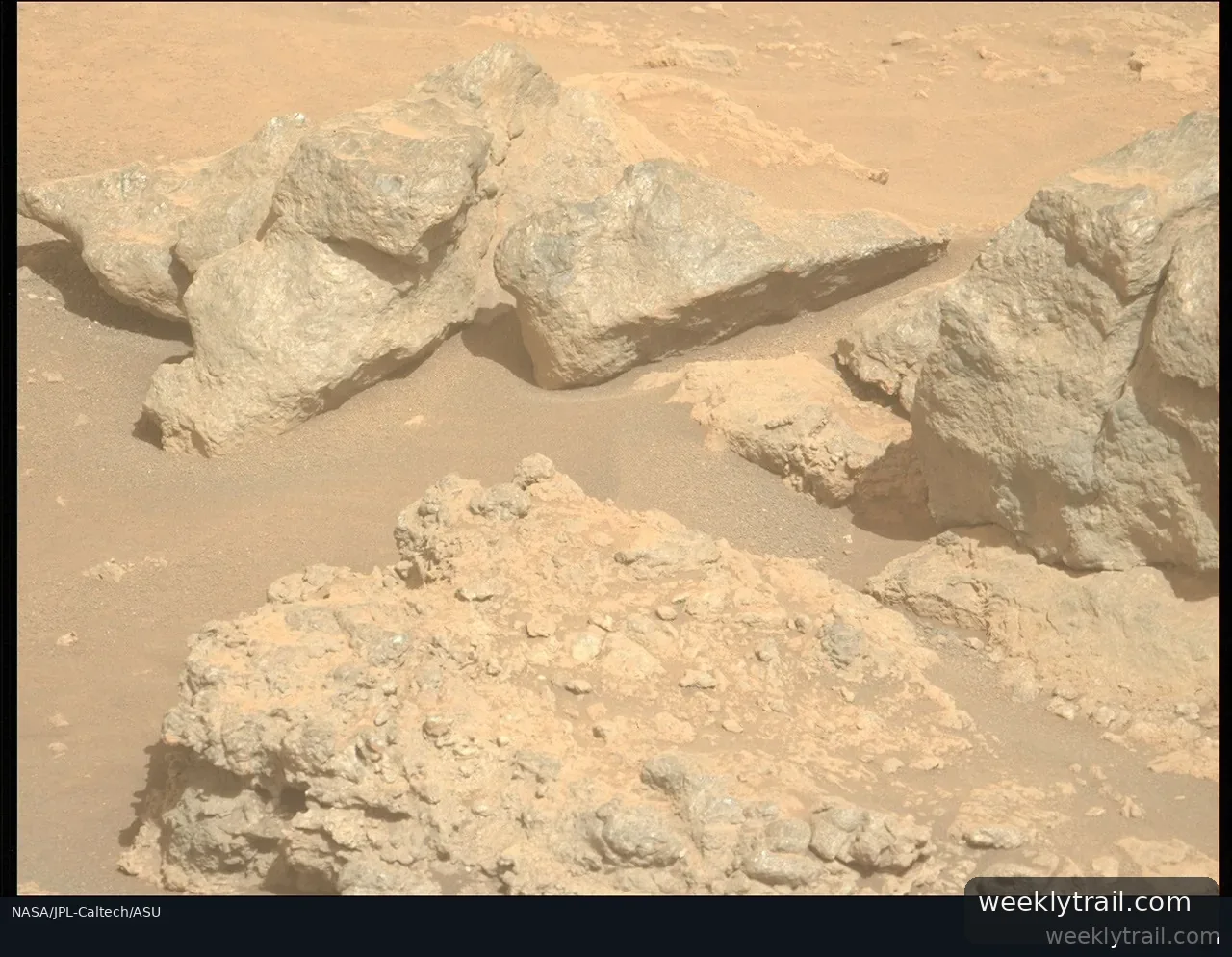
NASA's Perseverance rover imaged a contact between two distinct rock types at a target called "Tinga" near the southern border of the "Idubi" outcrop, a feature the mission team says could shed light on the region's geologic history.
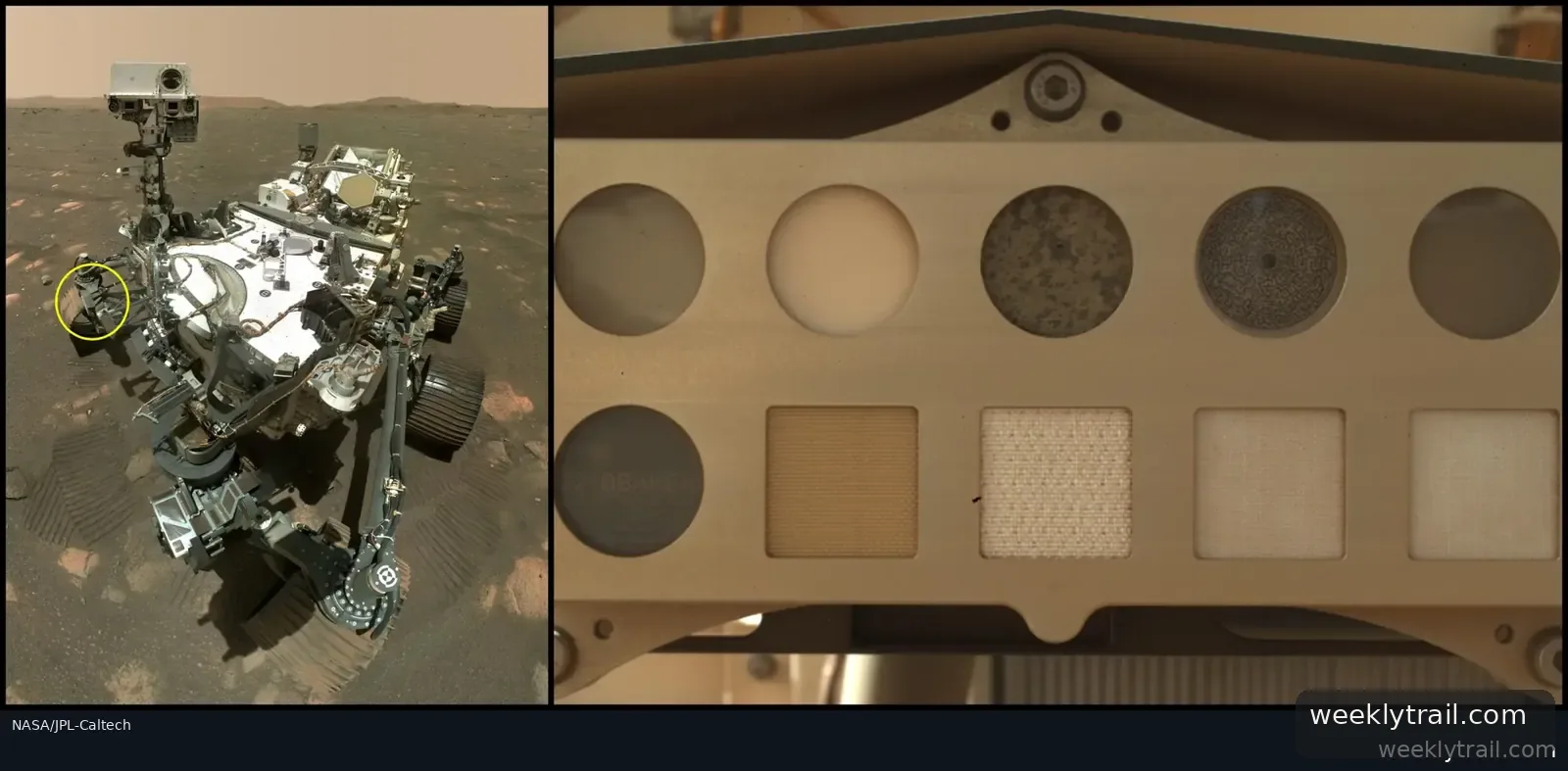
NASA's Perseverance rover measured fine and ultrafine dust particles clinging to spacesuit material samples over more than 1,645 Martian days, findings that could inform suit design, dust removal and crew health standards.
High school interns in NASA's SEES program used public mission data to model when an acoustic propellant-gauging method can take reliable readings during Intuitive Machines' IM-3 lunar mission, planned for 2027.
A deep image of M42, the Great Nebula in Orion, highlights glowing gas around hot young stars at the edge of an interstellar molecular cloud about 1,500 light-years away.
The Orion Nebula, a nearby starbirth region about 1500 light-years away, was highlighted in NASA's Astronomy Picture of the Day for October 26, 2026, in a deep image credited to Roberto Palaia.
The European Space Agency has described a series of science investigations and technology demonstrations aimed at preparing for long-term lunar exploration, including instruments for landing, resource prospecting and communications.
ESA's Moon Explore initiative, built from an open call that drew over 60 lunar mission ideas, includes four small missions: MAGPIE, Máni, Moonraker and MoonRAD. They aim to test new capabilities quickly ahead of larger exploration efforts.
ESA's Lunar Link communications element has completed its final integration and testing campaign in Cannes, France, and will be stored flight-ready while ESA studies how it could serve future lunar missions.