 WeeklyTrail
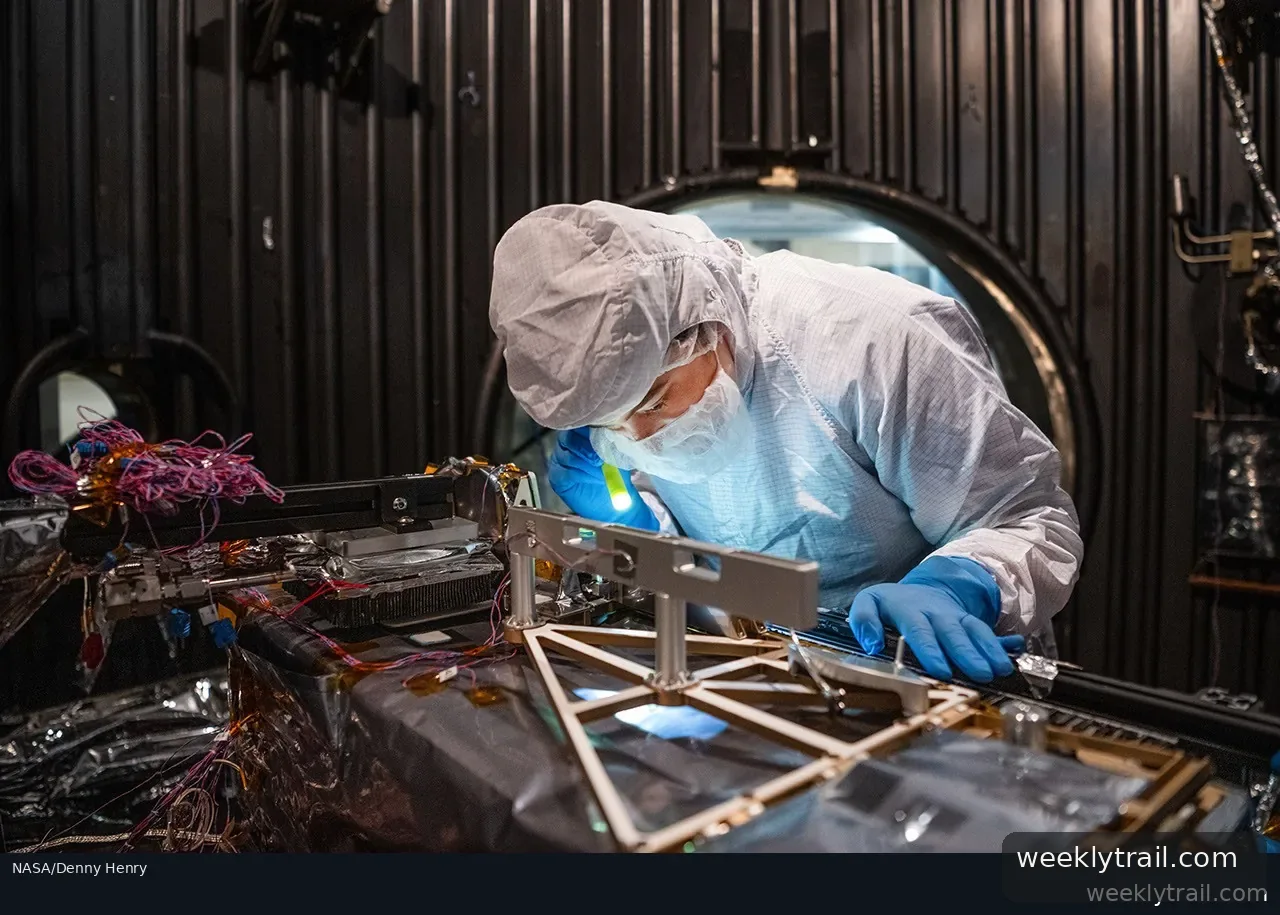
NASA announced on Aug. 11, 2026, that it had completed hardware development and testing for the Lunar Environment Monitoring Station, or LEMS, the first finished payload designed for Artemis astronauts to deploy on the Moon. The suitcase-size package, built at NASA's Goddard Space Flight Center in Greenbelt, Maryland, carries two sensitive seismometers intended to monitor ground vibrations from moonquakes and meteorite impacts in the lunar south polar region. It was to remain in a clean room there until assigned to an Artemis mission.
According to the agency, LEMS is designed to run independently after deployment, drawing power from a flexible solar array, following a preset operations plan, transmitting data to Earth monthly and holding a stable internal temperature through the region's wide day-to-night swings. NASA said the system was tested over roughly five months for launch shaking, the lunar thermal and radiation environment, and safe astronaut handling, and was built to operate through the two-Earth-week lunar night without external power or a heat source.
The payload builds on seismometers Apollo astronauts deployed between 1969 and 1972, which operated until 1977 and recorded about 13,000 moonquakes and other vibrations. The University of Maryland Baltimore County and University of Maryland College Park lead LEMS, with technical implementation led by NASA Goddard; the University of Arizona and Silicon Audio supplied the seismometers, Morehead State University provided telecommunications, and Washington University in St. Louis will manage data processing and dissemination.


Start the conversation. A good question is half the story.