 WeeklyTrail
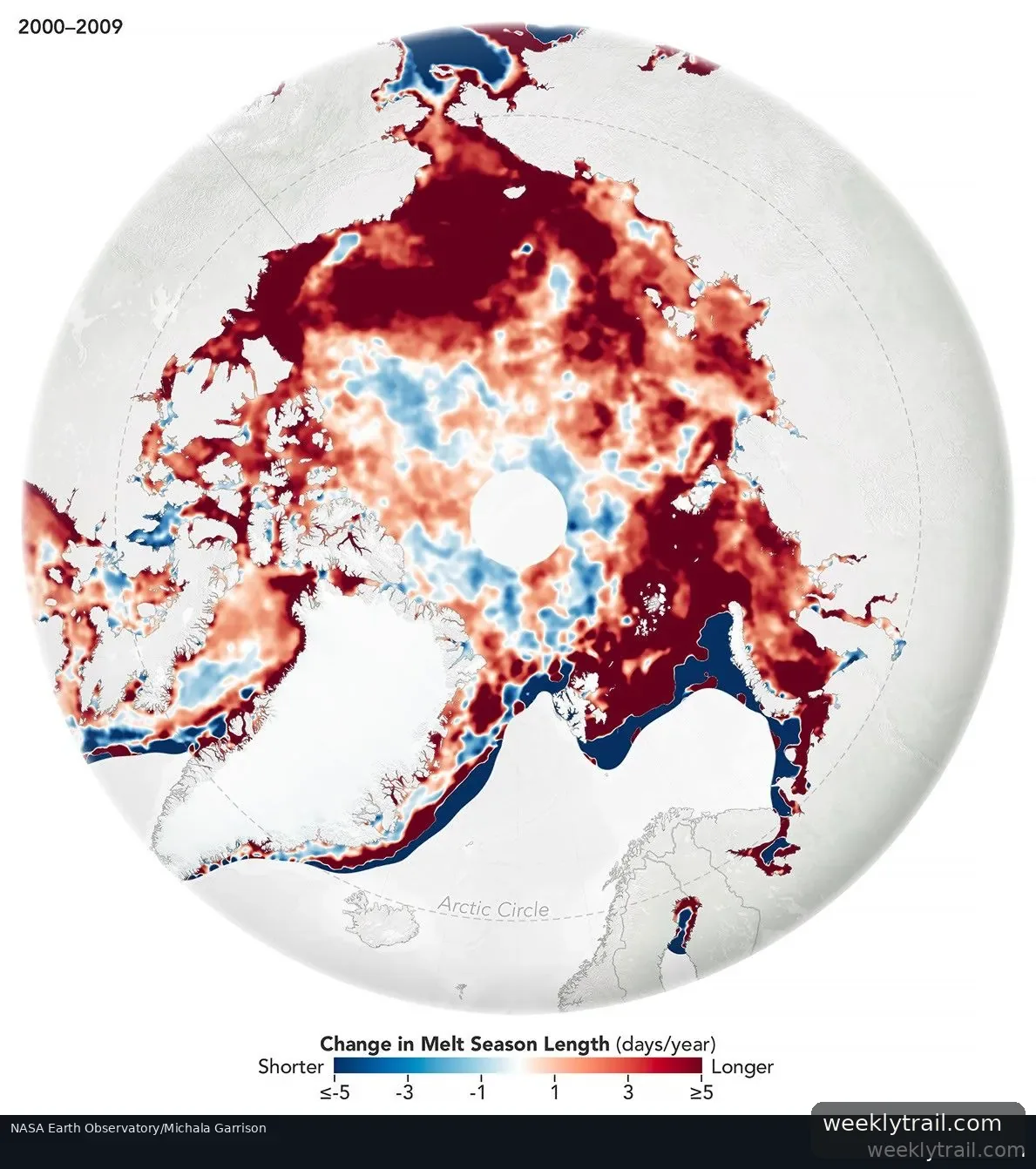
A NASA-led study reported on September 21, 2026, found that while the Arctic sea ice melt season has lengthened dramatically since satellite records began, the trend unexpectedly stabilized around 2010. The melt season is now about 40 days longer than in 1979, with most of that increase occurring before 2010, according to the research.
Researchers analyzed satellite observations from 1979 to 2023 to track when sea ice begins melting each spring and refreezes each autumn. They found the change was driven primarily by later autumn freezing rather than earlier spring melting. Co-author Linette Boisvert, an ice scientist at NASA's Goddard Space Flight Center, attributed the shift to thinner, less extensive ice producing greater variability. The study examined the Arctic's energy balance, noting that during rapid ice loss in the 2000s, darker exposed ocean water absorbed more sunlight, delaying freezing; since 2010, changing cloud patterns have reduced sunlight reaching parts of the Arctic Ocean.
The researchers cautioned that the apparent stabilization may prove temporary, and said whether it represents a lasting change or a pause remains an open question.



Start the conversation. A good question is half the story.