 WeeklyTrail
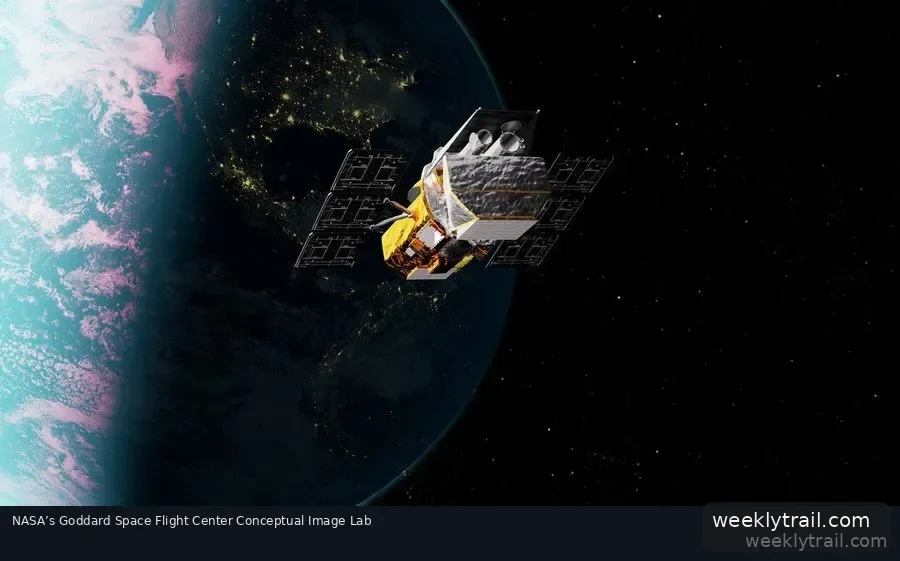
NASA and Katalyst Space announced on Wednesday, Aug 19, 2026, that the LINK spacecraft will not capture or boost NASA's Neil Gehrels Swift Observatory to a higher altitude to extend its science mission as planned, citing an ongoing commercial spacecraft attitude control issue. According to the announcement, LINK will still attempt rendezvous and proximity operations with Swift to demonstrate key capabilities for future space exploration.
NASA Administrator Jared Isaacman said the outcome was not what the team was working toward but did not change why the mission was worth attempting, adding that lessons from LINK's rendezvous attempt would inform later missions. Shawn Domagal-Goldman, director of NASA's Astrophysics Division, described the effort as a high-risk, high-reward first-of-its-kind attempt developed on an unprecedented timeline driven by the Sun's activity.
NASA said that without intervention Swift is likely to re-enter Earth's atmosphere later this year, and that it will continue prioritizing options to respond rapidly to cosmic events. Swift launched in 2004 to study gamma-ray bursts; after 21 years of science operations, its low Earth orbit began to decay rapidly due to increased solar activity. NASA awarded Katalyst a contract in September 2025 for the servicing mission, and LINK launched July 3 on a Northrop Grumman Pegasus XL rocket from Kwajalein Atoll.

No comments yet.