 WeeklyTrail
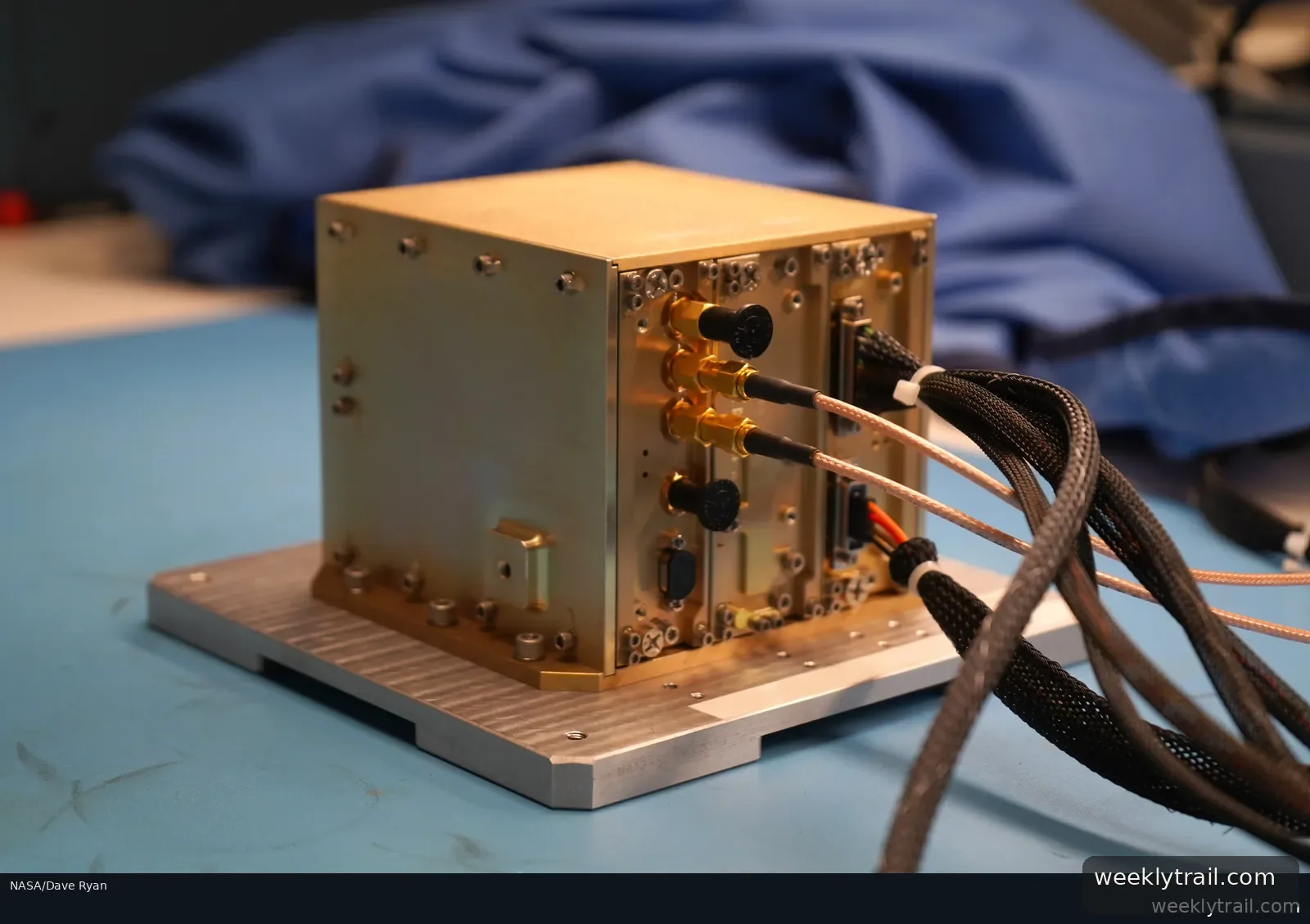
NASA reported on August 3, 2026, that it delivered the NavCube3-mini payload to Intuitive Machines on July 13, 2026, for integration into Altus-1, the company's first lunar relay satellite. NASA described the delivery as a milestone for future lunar communications and navigation services intended to support astronauts and rovers at its planned Moon Base.
According to NASA, the receiver is about half the size of a shoebox and weighs 3.5 pounds. It is designed to use signals from Earth-based GPS and Galileo satellite systems at lunar distances, operating on less than 20 watts of power — roughly the same as a laptop computer — to determine a spacecraft's position far beyond Earth orbit. NASA said the payload underwent vibration, thermal vacuum and electromagnetic compatibility testing at Goddard Space Flight Center, with performance testing before and after each environmental test.
Altus-1 is the first of a planned network of lunar relay satellites being developed under Intuitive Machines' Near Space Network Services contract with NASA. The relays are intended to provide communications and navigation support, including in the lunar South Pole region, where NASA says Artemis astronauts will land in 2028. NASA described NavCube3-mini as a technology demonstration validating GNSS-based navigation in the lunar region.


No comments yet.