 WeeklyTrail
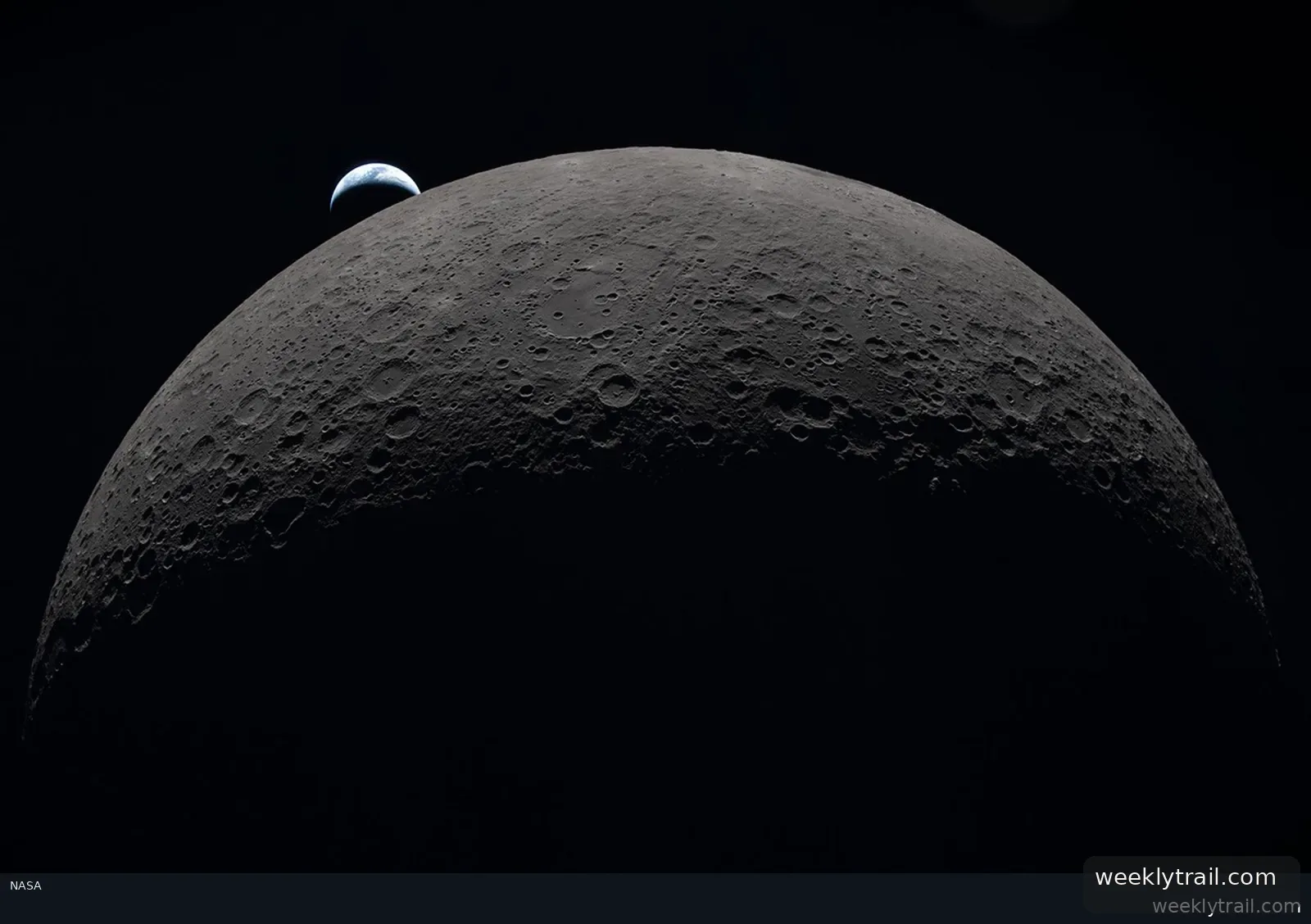
A NASA-led study published Aug. 19, 2026, in Science Advances reported that some microbes commonly found in spaceflight environments and on human skin could survive in shaded areas near the Moon’s South Pole. The researchers say the finding points to a need to better understand how microbes persist in extreme lunar conditions before crewed exploration expands there.
The team, led by planetary scientist Prabal Saxena of NASA’s Goddard Space Flight Center, tested five microbes, including bacteria and fungi, chosen for their known toughness in spaceflight settings. Besides Aspergillus niger, they included Bacillus subtilis, Staphylococcus aureus, Deinococcus radiodurans and several Fusarium species. Using environmental maps built from Lunar Reconnaissance Orbiter elevation and temperature data and radiation models, the scientists simulated three regions near the South Pole: Nobile Rim, Connecting Ridge and De Gerlache Rim. Aspergillus niger, the most resistant to ultraviolet radiation, could survive even in areas with some sunlight exposure, the study reported.
In the study, survival meant staying alive for at least one Earth day, not growing or reproducing. The authors noted there is no evidence the Moon has key ingredients to sustain growth and replication, such as liquid water.



Start the conversation. A good question is half the story.