 WeeklyTrail
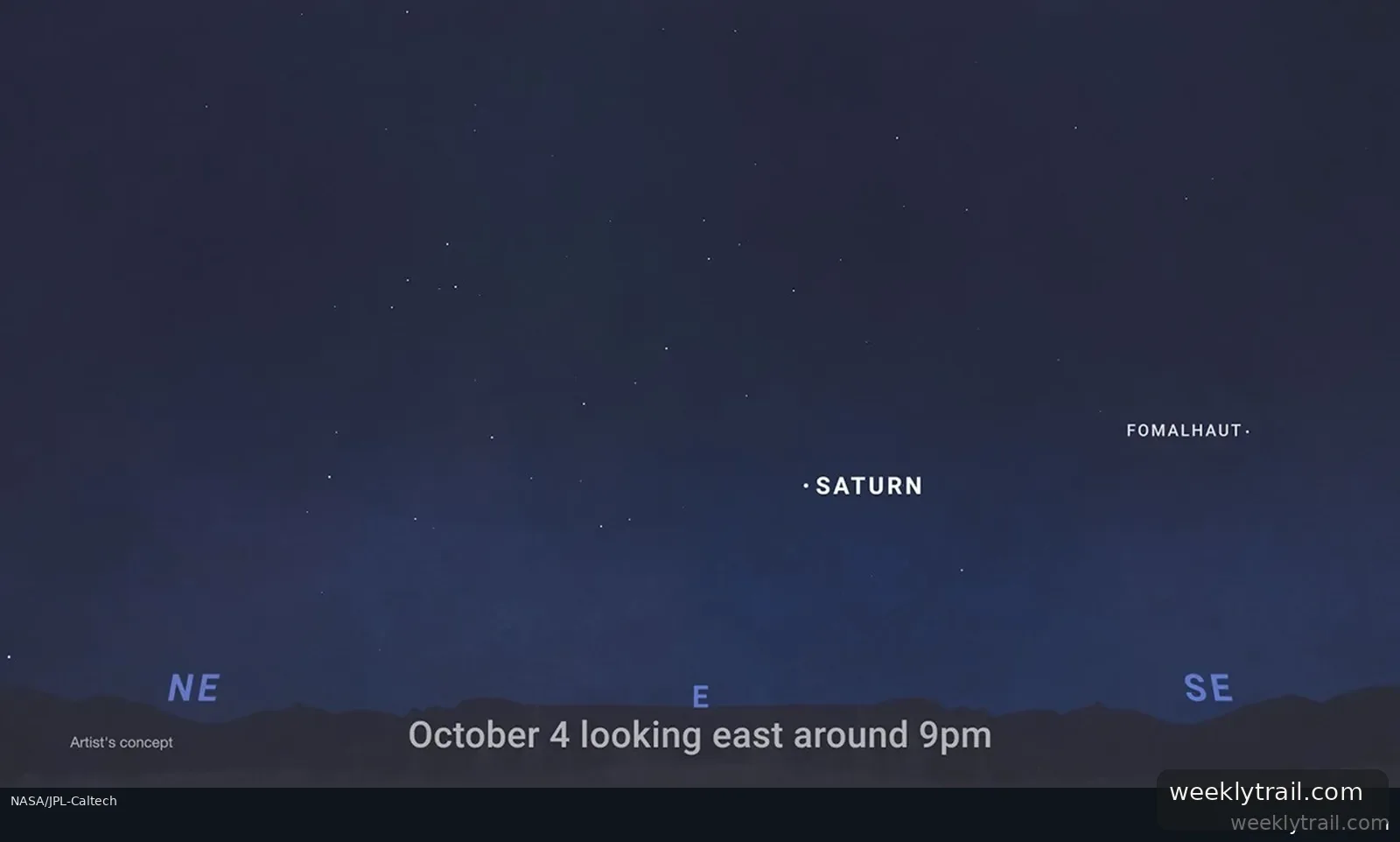
NASA's October 2026 skywatching update highlights Saturn at opposition on October 4, when Earth passes between the Sun and Saturn. The ringed planet rises around sunset and remains visible for much of the night. The guide also notes that Hubble Space Telescope observations reported the previous month revealed a ten-sided atmospheric wave circling Saturn's south pole, a feature that appears to be strengthening.
The Orionid meteor shower peaks on the night of October 21 into the morning of October 22. The meteors come from debris left by Halley's Comet and can appear across any part of the sky. A bright waxing gibbous Moon may wash out fainter meteors this year, so the best chance may be in the hours before dawn after moonset. On October 6, a thin crescent Moon appears close to bright Jupiter before sunrise.
On the night of October 27 into the 28th, the Moon passes close to the Pleiades, also known as the Seven Sisters. The cluster appears as a slightly fuzzy grouping of 6 to 7 stars visible to the unaided eye, with binoculars or a telescope revealing more detail.


Start the conversation. A good question is half the story.