 WeeklyTrail
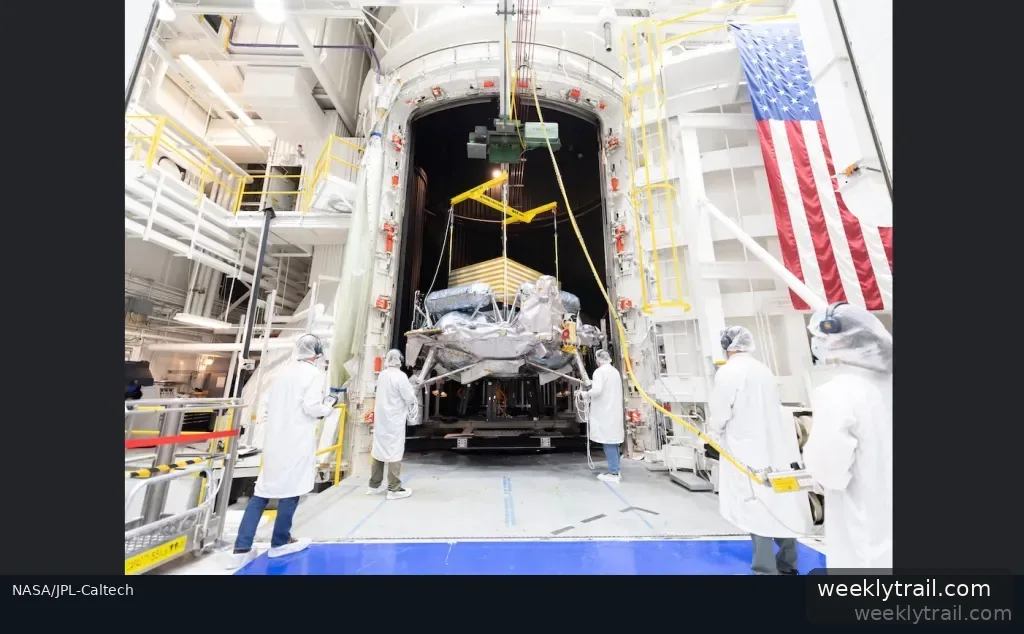
NASA's Jet Propulsion Laboratory reported on October 13 that Voyager Technologies' Griffin Mission One (Griffin-1) lander completed a series of environmental tests simulating the extremes of space and launch. The work took place under NASA's CLPS initiative within its Moon Base Program, and the agency said results show the spacecraft is ready to withstand the journey ahead.
Testing began in July after the 2,789-pound (1,265-kilogram) craft traveled from Voyager Lunar Systems' Pittsburgh facilities to JPL in Southern California. Engineers spun it to measure mass properties, checked electromagnetic interference and compatibility, shook it on a table in three directions, and blasted it with sound up to 153 decibels in a sealed acoustic chamber. The campaign culminated in the 25-Foot Space Simulator, a thermal vacuum chamber where the lander alternately baked at up to 167 F (75 C) and froze to minus 148 F (minus 100 C) over about two weeks.
Griffin-1 is expected to launch later this year aboard a SpaceX Falcon Heavy, carrying more than 1,100 pounds (455 kilograms) of cargo to Nobile Crater near the lunar South Pole, along with 10 science and technology demonstrations from six countries. It has since returned to Voyager's facility for final assembly ahead of launch-readiness operations before shipment to Cape Canaveral.

Start the conversation. A good question is half the story.