 WeeklyTrail
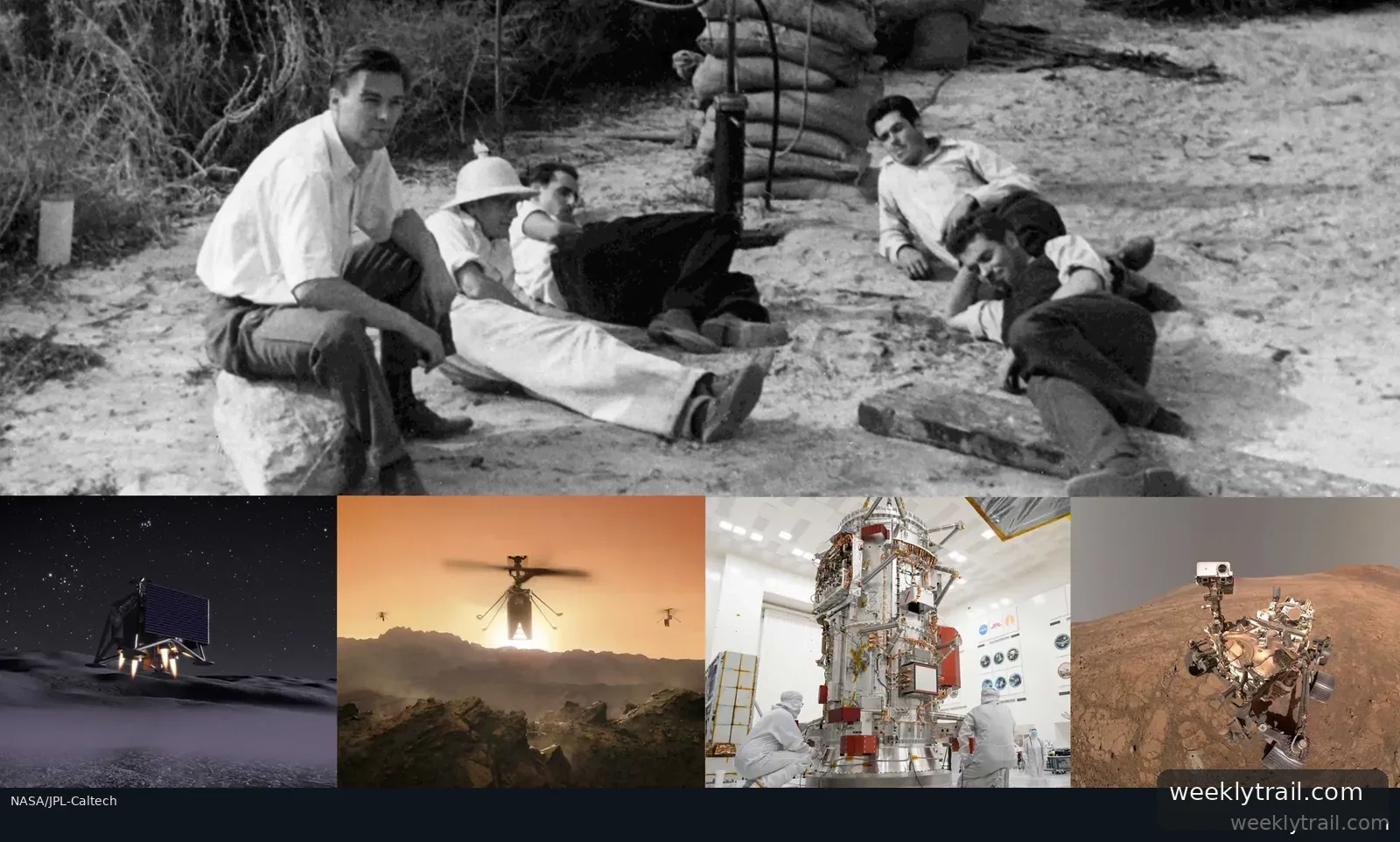
NASA's Jet Propulsion Laboratory is marking 90 years since a group of Caltech graduate students and enthusiasts conducted rocket-propulsion tests in Pasadena's Arroyo Seco on Oct. 31, 1936, according to a JPL release published Oct. 21, 2026. JPL, now managed by Caltech for NASA, traces a line of firsts from Explorer 1, the first U.S. satellite, to the first rovers on Mars and the first rotorcraft to fly there.
Looking ahead, JPL says the SkyFall mission, aiming for a 2028 launch, would deploy three helicopters during descent over Mars to map hidden ice deposits and analyze weather patterns. It is also developing MoonFall, planned to land large propulsive drones at the lunar South Pole that same year. SunRISE, set for a 2027 launch, involves six small satellites flying in formation to study the Sun's activity. JPL also manages NEO Surveyor, which will hunt for potentially hazardous asteroids other telescopes cannot find.
JPL described further work on Earth-observing missions and the far-infrared PRIMA mission. The release also notes that on Nov. 18 Voyager 1 reaches a full light-day from Earth, about 16 billion miles. JPL director Dave Gallagher said the lab stands on an extraordinary foundation and is ready to push boundaries with new missions.

Start the conversation. A good question is half the story.