 WeeklyTrail
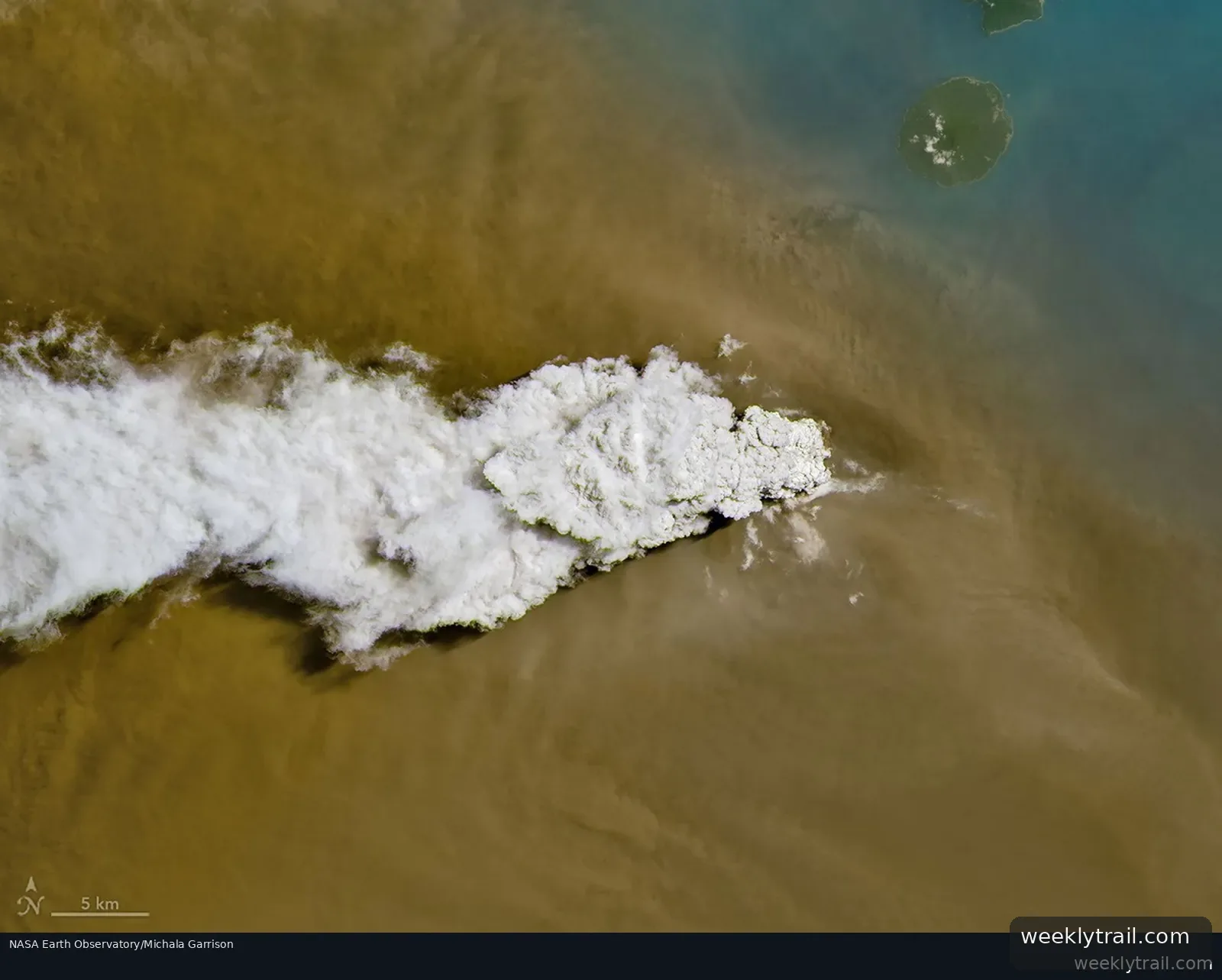
NASA Earth Observatory reported on September 9, 2026, that an eruption at Anak Krakatau, the small volcano between the Indonesian islands of Java and Sumatra, lasted more than 24 hours in early September 2026, degrading air quality in parts of the country, including Jakarta, and disrupting thousands of flights. The agency's report, dated to that publication day, said Indonesia's meteorological agency observed ash reaching altitudes up to 6,000 meters (20,000 feet) east of the volcano and 15,000 meters (50,000 feet) to the west by September 6. News reports cited by the observatory said ash prompted the temporary closure of eight airports on Java and Sumatra, disrupting nearly 3,000 flights.
According to the Indonesian Humanitarian Coordination Platform, ashfall affected populated areas, particularly east of the volcano in Jakarta and other parts of West Java. The observatory noted that this air quality hazard differs from peatland fire smoke elsewhere in the country in particle characteristics, dispersal patterns and protection measures.
The continuous explosive eruption had subsided by September 6, the observatory reported, though the volcano kept rumbling and returned to intermittent Strombolian activity. Airports had resumed operation by September 8, but the volcano remained at the country's second-highest alert level, where it had stood since early July.



Start the conversation. A good question is half the story.