 WeeklyTrail
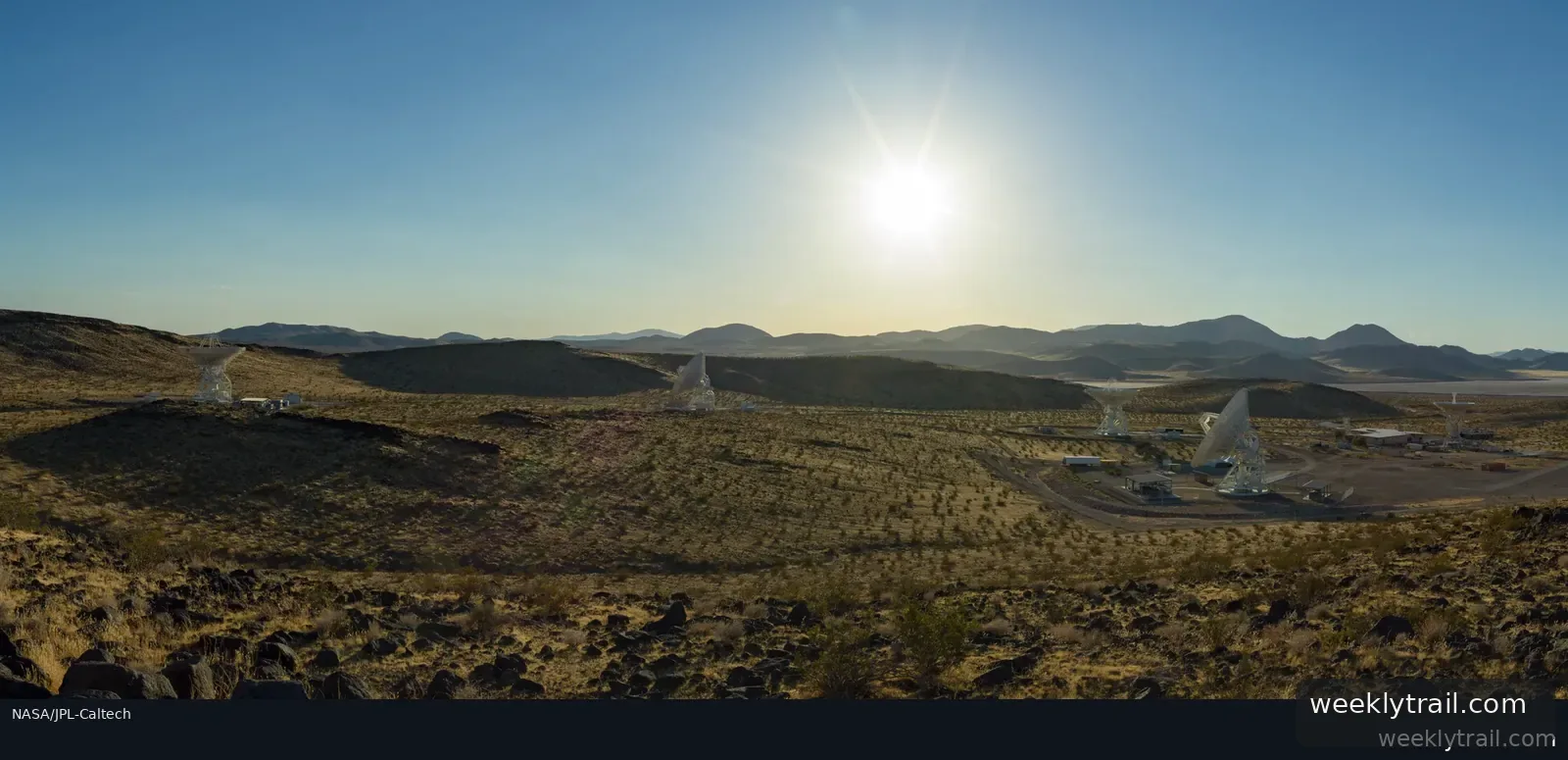
NASA's Deep Space Network has added a new 34-meter-wide (114-foot-wide) radio frequency antenna, Deep Space Station 23 (DSS-23), at the Goldstone Deep Space Communications Complex near Barstow, California, according to an Aug. 25, 2026, JPL report. The network uses dishes at three global facilities to support more than 40 spacecraft exploring the solar system and interstellar space. NASA leadership, personnel and dignitaries gathered at the completed antenna for a ceremonial ribbon cutting.
After a testing campaign from May through July, DSS-23 began operations on Aug. 3, tracking NASA's Chandra X-ray Observatory, the report said. Since then it has communicated with dozens of missions, including the Mars Reconnaissance Orbiter, Psyche, Juno and Voyager 1. Construction began in February 2020; the 133-ton metal reflector framework was placed atop the pedestal in December 2024. DSS-23 is the fifth antenna at Goldstone and the fifth added under the Aperture Enhancement Project, begun in 2009 to add six new 34-meter multifrequency beam-waveguide antennas.
James Kenyon, an associate administrator at NASA Headquarters, said expanding the network strengthens communications for future missions. Dave Gallagher, director of JPL, said the antenna brings the network closer to full modernization. Germaine Aziz, project manager at JPL, said the main challenge was integrating mechanical, electrical, software and radio frequency systems into one mission-ready asset. The project will be complete when a sixth antenna, Deep Space Station 33, comes online at Canberra in 2029, bringing the total number of 34-meter antennas across the network to 13.


Start the conversation. A good question is half the story.