 WeeklyTrail
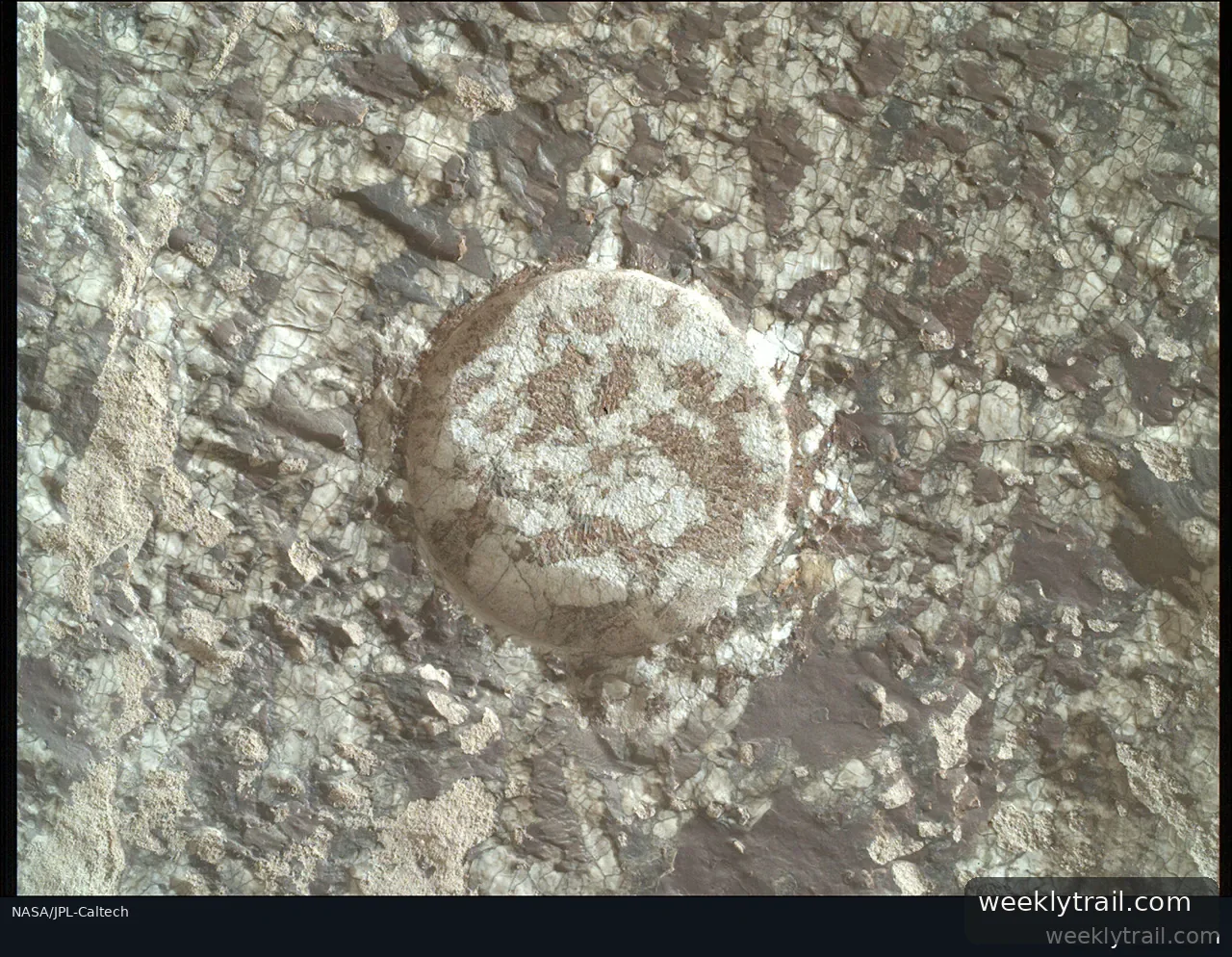
NASA's Perseverance rover has spent 2026 exploring an area called "Lac de Charmes," a region of valleys and ridges west of the Jezero crater rim, the mission team reported on 28 September 2026. The rocks there are among the oldest the rover has encountered, formed when Mars was still a young planet struck by asteroid impacts, before the sedimentary rocks inside Jezero crater formed in rivers and lakes. The team chose to study the terrain thoroughly before deciding which rocks to sample.
Perseverance followed a looping path between outcrops and created 13 abrasion patches on rocks of interest. Investigations suggest many formed from cooled lava or magma, others in the aftermath of a violent impact, and some show evidence of both processes. A new algorithm, using a processor originally meant for communicating with the Ingenuity helicopter, has enabled longer and more accurate drives.
With exploration of Lac de Charmes nearing its end, the team sent the rover toward an area nicknamed "Idubi," where hundreds of light-toned boulders had been spotted from a distance. An abrasion patch named "Badger Peak" revealed a light-and-dark texture unlike any the rover has seen, but a sampling attempt failed because of the rock's high hardness. The team is searching for a similar rock to sample and has stopped at a nearby outcrop called "Gardenia," possibly a breccia, where an abrasion was planned for the week of the report.



Start the conversation. A good question is half the story.