 WeeklyTrail
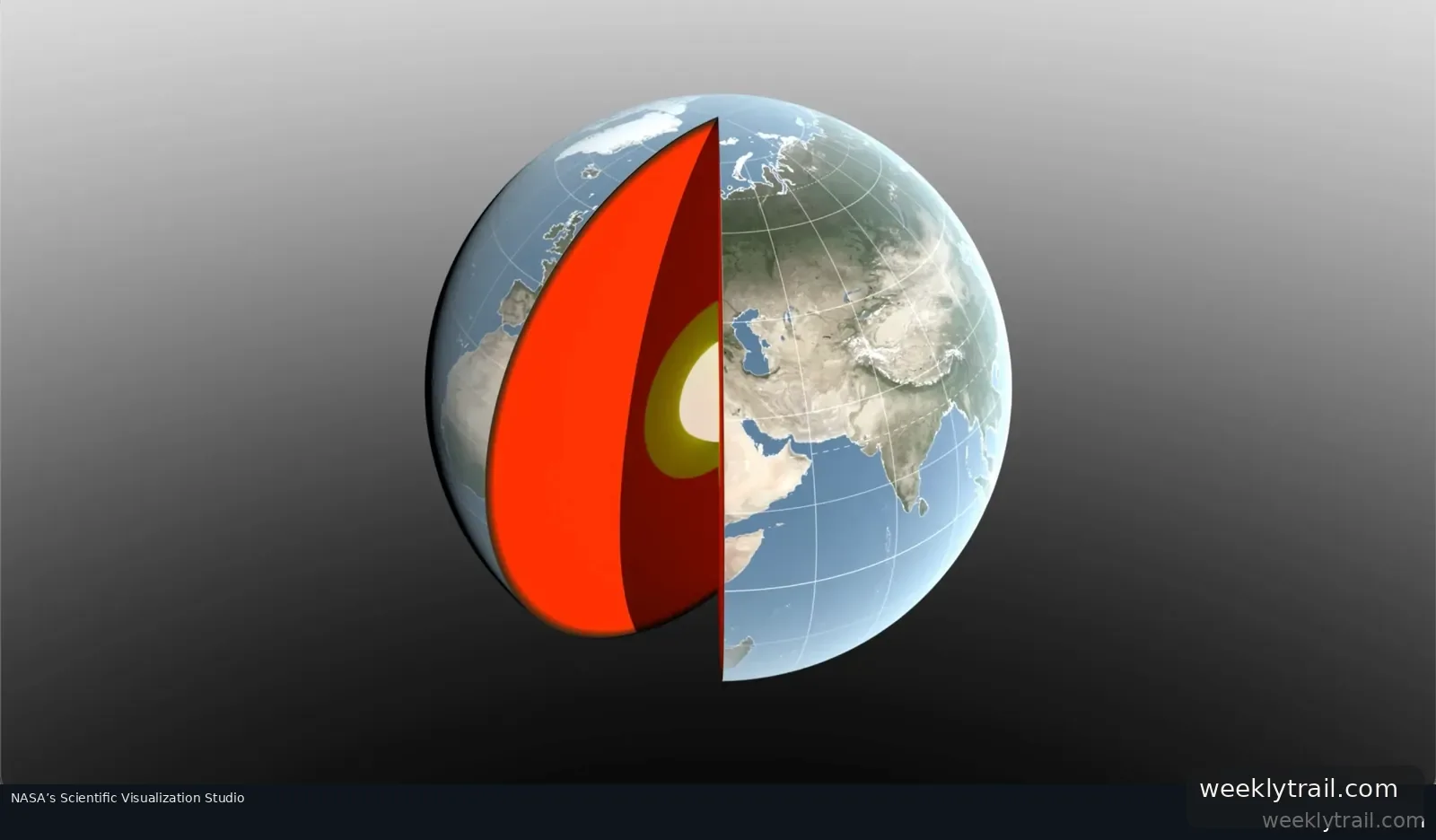
Seasonal movement of water, ice and air shifts Earth’s center of mass relative to its geometric center by fractions of an inch, NASA reported on September 16, 2026. A team led by NASA’s Jet Propulsion Laboratory proposed a technique using ultraprecise satellite tracking to estimate that displacement, according to the agency. The study appeared in Geophysical Journal International.
The approach adds GPS tracking and low Earth orbit satellite data to laser ranging, and accounts for how the weight of water and ice deforms Earth’s crust, NASA said. Lead author Donald Argus, a JPL geoscientist, said the annual movement was estimated at about half of what was believed eight years earlier. NASA noted that the last two international estimates, from 2017 and 2023, differed by 0.27 inches (7 millimeters).
The authors attributed the seasonal oscillation to oceans, atmosphere and continental water. They reported that snow accumulation in North America and Eurasia shifts the center of mass about 3 millimeters toward the North Pole in March, and that Amazon rainwater peaking at 2,400 gigatons in April swings it 2.2 millimeters toward South America. NASA said the mass calculations are consistent with GRACE-FO observations and that the GRACE-C mission was targeting a launch in late 2028.

No comments yet.