 WeeklyTrail
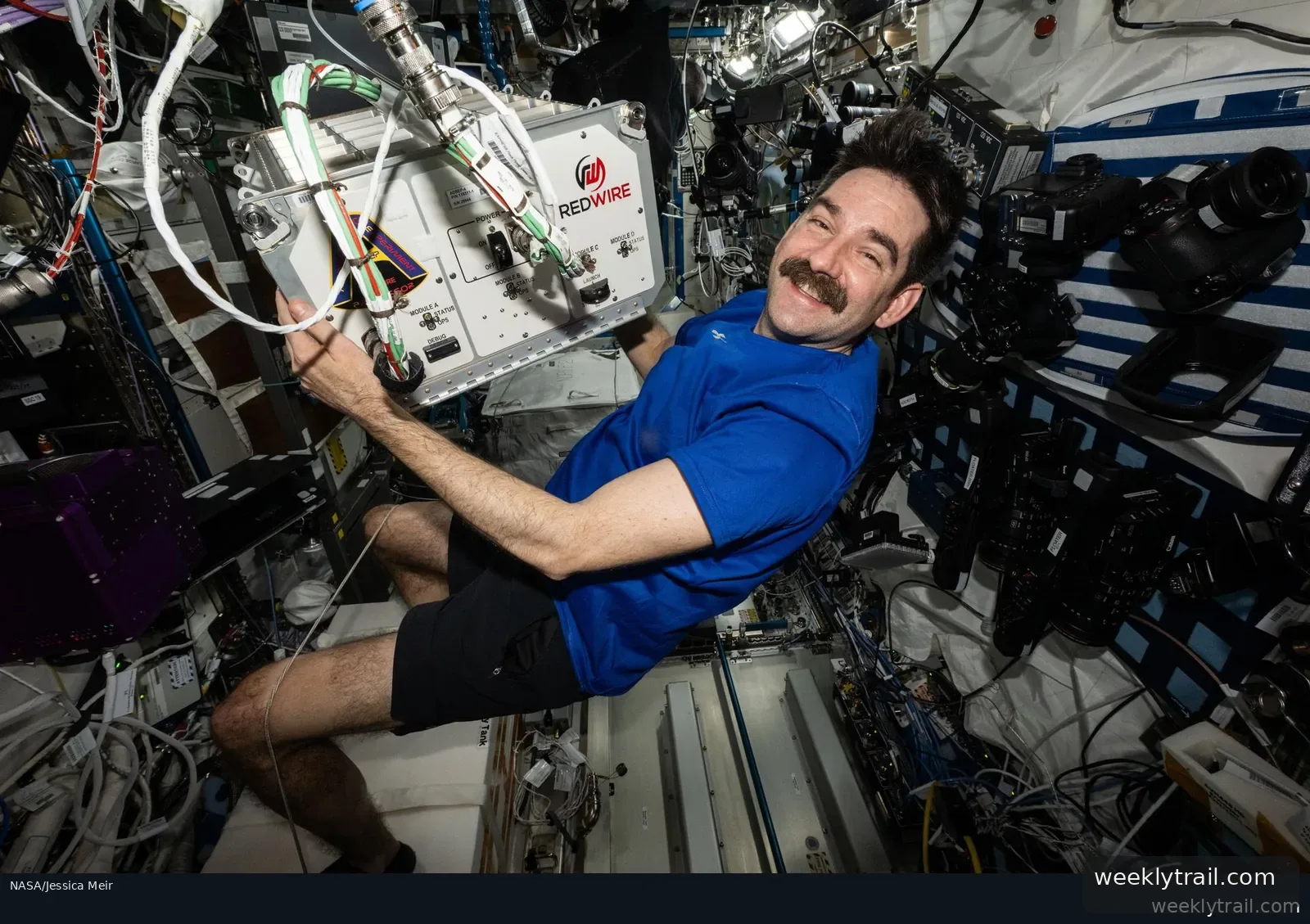
In a report published Sept. 24, 2026, NASA described a day of microgravity health research aboard the International Space Station. Station commander Jessica Meir and flight engineer Jack Hathaway took turns scanning each other's organs with ultrasound hardware in the Columbus laboratory while a ground technician monitored in real time. The EchoFinder-2 study uses a tablet with augmented reality and artificial intelligence to position the probe and detect and visualize organs, with possible future use for crews operating far from Earth without ground guidance.
NASA said an immune-system study was in its third day in the Harmony module, where flight engineer Anil Menon processed blood samples after a 24-hour incubation, spun them in a centrifuge and stored them in a science freezer for later analysis. ESA flight engineer Sophie Adenot wore the sensor-equipped Bio-Monitor vest and headband during an hour on an exercise cycle, monitoring blood pressure, heart rate and breathing rate.
Adenot and Menon also moved cargo in and out of the Cygnus XL spacecraft, which the report said launched April 11 with over 11,000 pounds of science and supplies. Roscosmos engineers Pyotr Dubrov, Anna Kikina and Andrey Fedyaev continued unloading Progress 96, which arrived Sept. 19 with nearly three tons of supplies, and performed treadmill fitness assessments and power-system work.


Start the conversation. A good question is half the story.