 WeeklyTrail
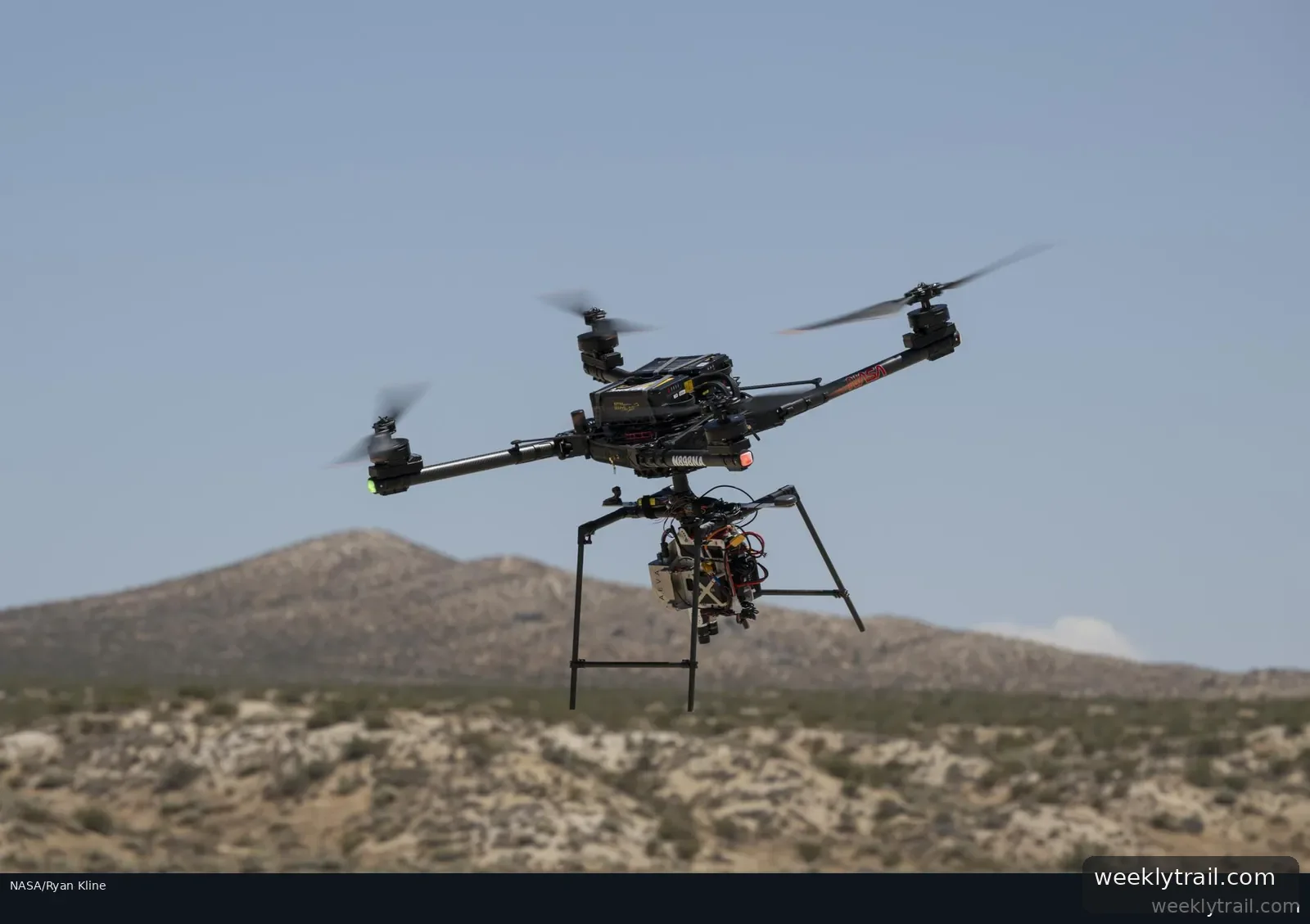
NASA reports that a drone carrying its Safe and Precise Landing – Integrated Capabilities Evolution (SPLICE) payload completed simulated lunar descent and landing maneuvers on Aug. 27 at Rogers Dry Lake near the agency's Armstrong Flight Research Center in Edwards, California. According to NASA, the guidance system mapped the terrain and assessed potential landing areas, diverting the aircraft to a safer location when the targeted area was judged unsafe.
Researchers at NASA's Johnson Space Center in Houston developed SPLICE and worked with Armstrong specialists to integrate and fly it aboard an Alta-X drone in June and July. Those flights checked communications, data handling, telemetry and command-control performance ahead of a full-scale test planned at Voyager Technologies in Mojave, California, later in November.
Project manager Davis Adams said the flight raised the technology's readiness level for possible integration into future robotic and crewed lunar missions. NASA said it has worked with commercial lunar lander providers on versions of the system and that the software is currently planned for the agency's software catalog this fall. The agency described earlier Flight Opportunities testing in 2019 and 2020 as groundwork for the demonstration.


Start the conversation. A good question is half the story.