 WeeklyTrail
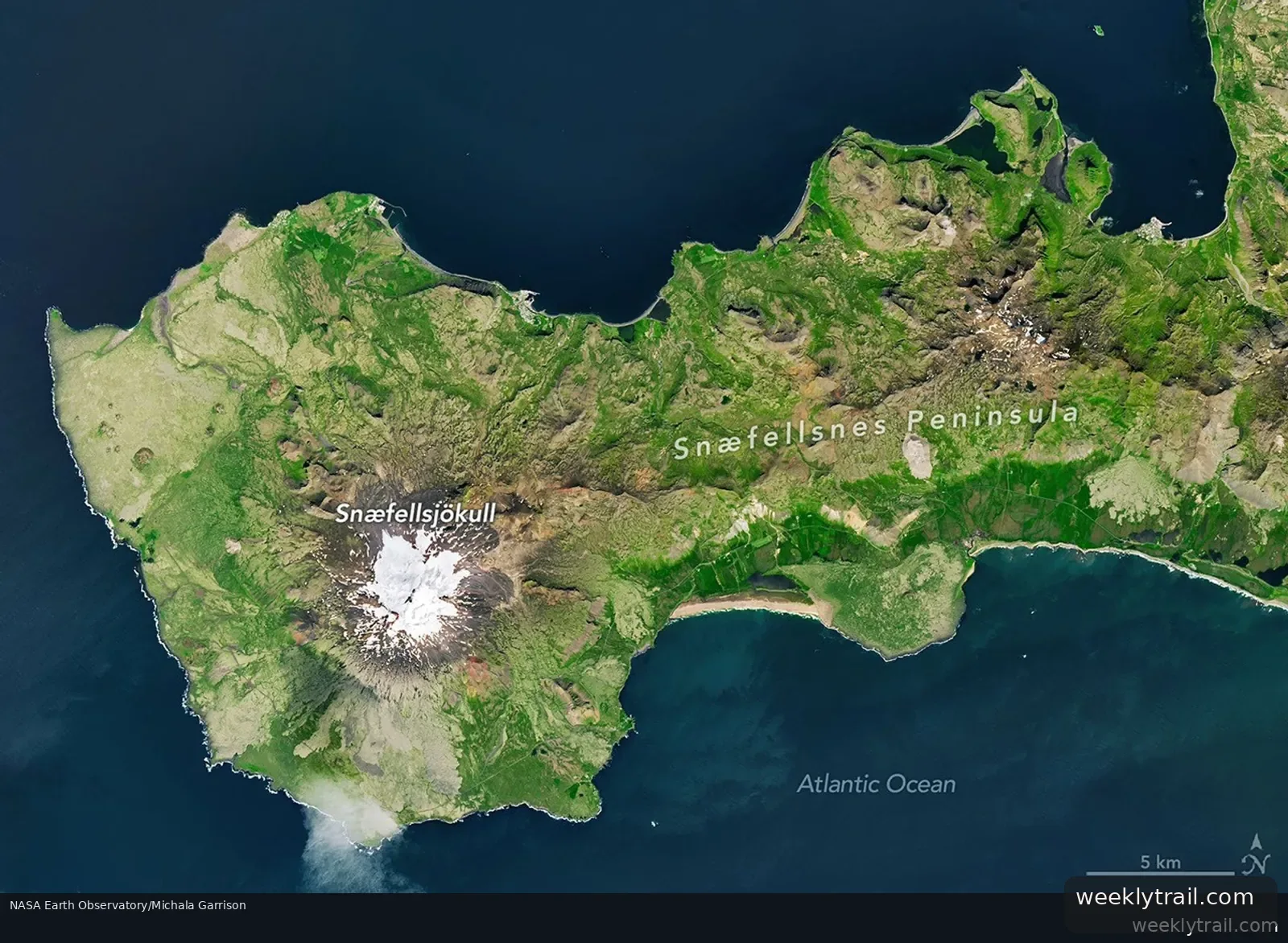
A NASA Earth Observatory report published on August 12, 2026 described the total solar eclipse expected that day, when the Sun, Moon and Earth aligned. According to the report, the Moon's shadow was to first cross the Arctic Circle from northern Russia and track along eastern Greenland before reaching western Iceland, where totality was expected to begin at about 17:45 Universal Time. The greatest eclipse was projected near Iceland's sparsely populated Snæfellsnes peninsula.
The report said the umbra would then progress across the North Atlantic and reach northern Spain shortly before sunset, running east-southeast across the country. Based on decades of satellite measurements of August cloud cover, viewers in Spain were described as having a higher likelihood than those in Iceland of a clear view. Parts of Europe, Africa, Canada and the northern and northeastern United States were expected to see a partial eclipse.
The report noted that the glacier-capped Snæfellsjökull volcano last erupted about 1,800 years ago and that a broader area of the peninsula was designated a UNESCO biosphere reserve in 2025, containing over 70 percent of Iceland's flora.


No comments yet.