


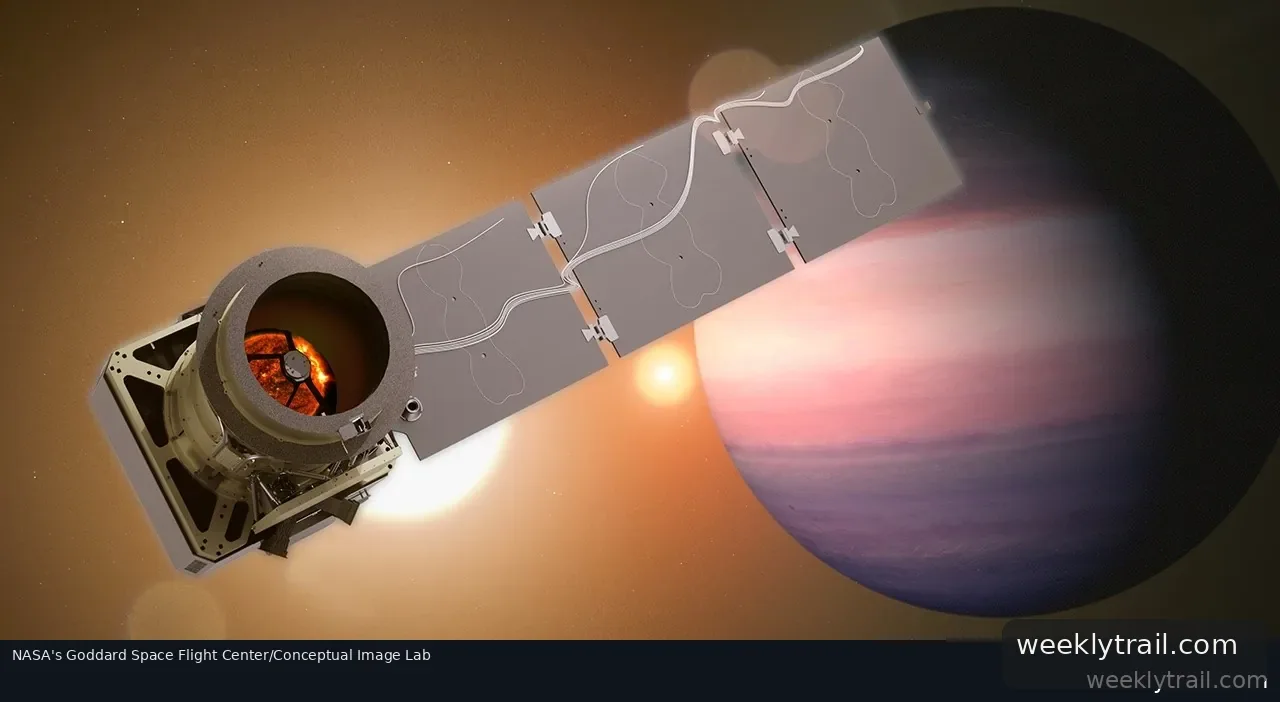
NASA reported on Aug. 25, 2026, that its Pandora small satellite has begun observations of exoplanets and their host stars. The mission, launched Jan. 11 into low Earth orbit and funded by NASA's Astrophysics Pioneers program, aims to determine the atmospheric make-up of at least 20 exoplanets, including the presence of hazes, clouds and water.
Pandora is designed to separate chemical signatures in a planet's atmosphere from signals produced by the host star's uneven surface. It will observe planets and stars simultaneously in visible and near-infrared light, using an all-aluminum telescope about 18 inches (45 centimeters) in diameter. Over its year-long primary mission, it will observe at least 20 exoplanets 10 times, with each 24-hour observation including a transit.
Elisa Quintana, Pandora's principal investigator at NASA's Goddard Space Flight Center, said the data would help address uncertainty over how starlight affects measurements of exoplanet atmospheres. Project scientist Knicole Colón said combining Pandora and James Webb Space Telescope data would help separate stellar and planetary signals. NASA said the spacecraft is healthy and instruments are performing as hoped.




No comments yet.