 WeeklyTrail
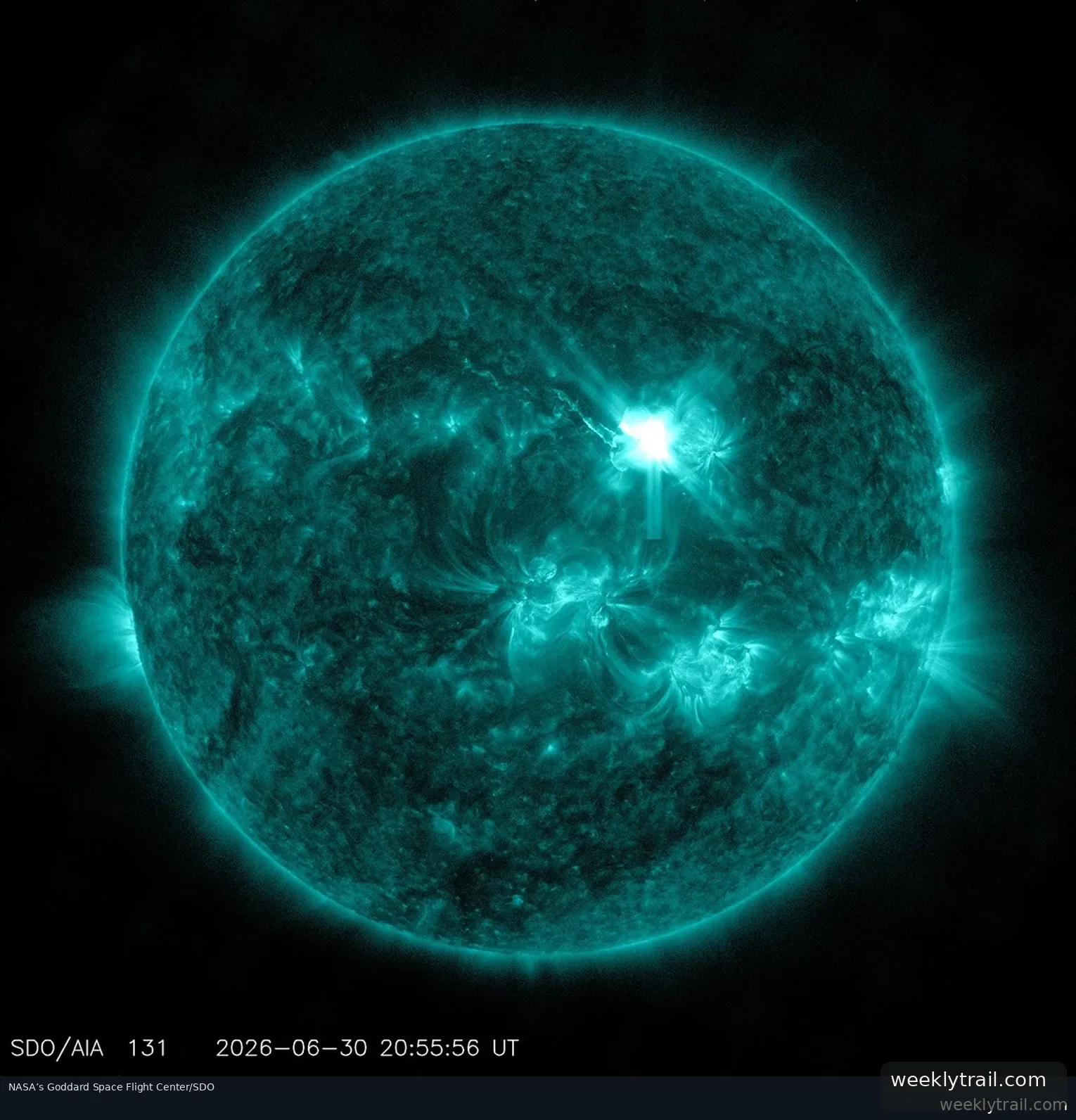
A team with NASA’s COFFIES DRIVE Science Center, drawing researchers from the New Jersey Institute of Technology, Princeton University and NASA’s Ames Research Center, reported a machine-learning model that can predict the emergence of active regions on the Sun up to 12 hours before they appear, according to the Aug. 14, 2026 report. The approach, published in the Journal of Geophysical Research: Machine Learning and Computation, analyzes Solar Dynamics Observatory data on NASA Ames supercomputers, looking for small changes in acoustic waves and magnetic field patterns as regions rise beneath the surface.
The model uses a sliding-window transformer architecture to scan long sequences of observations and flag subtle drops in acoustic activity, allowing it to estimate approximate locations of emerging sunspots rather than counting those already visible. COFFIES co-investigator Alexander Kosovichev, at NJIT, compared the precursors to a slight change of rhythm within a very noisy orchestra. The team says the model is not ready for operational real-time forecasting and plans to validate it across many more known solar events.
Michelangelo Romano, deputy director of NASA’s Moon to Mars Space Weather Analysis Office, said the model could potentially help predict complex active regions often linked to hazardous flares and coronal mass ejections, which could support advanced warning for astronauts on the International Space Station, Artemis and upcoming Moon Base missions.

No comments yet.