 WeeklyTrail
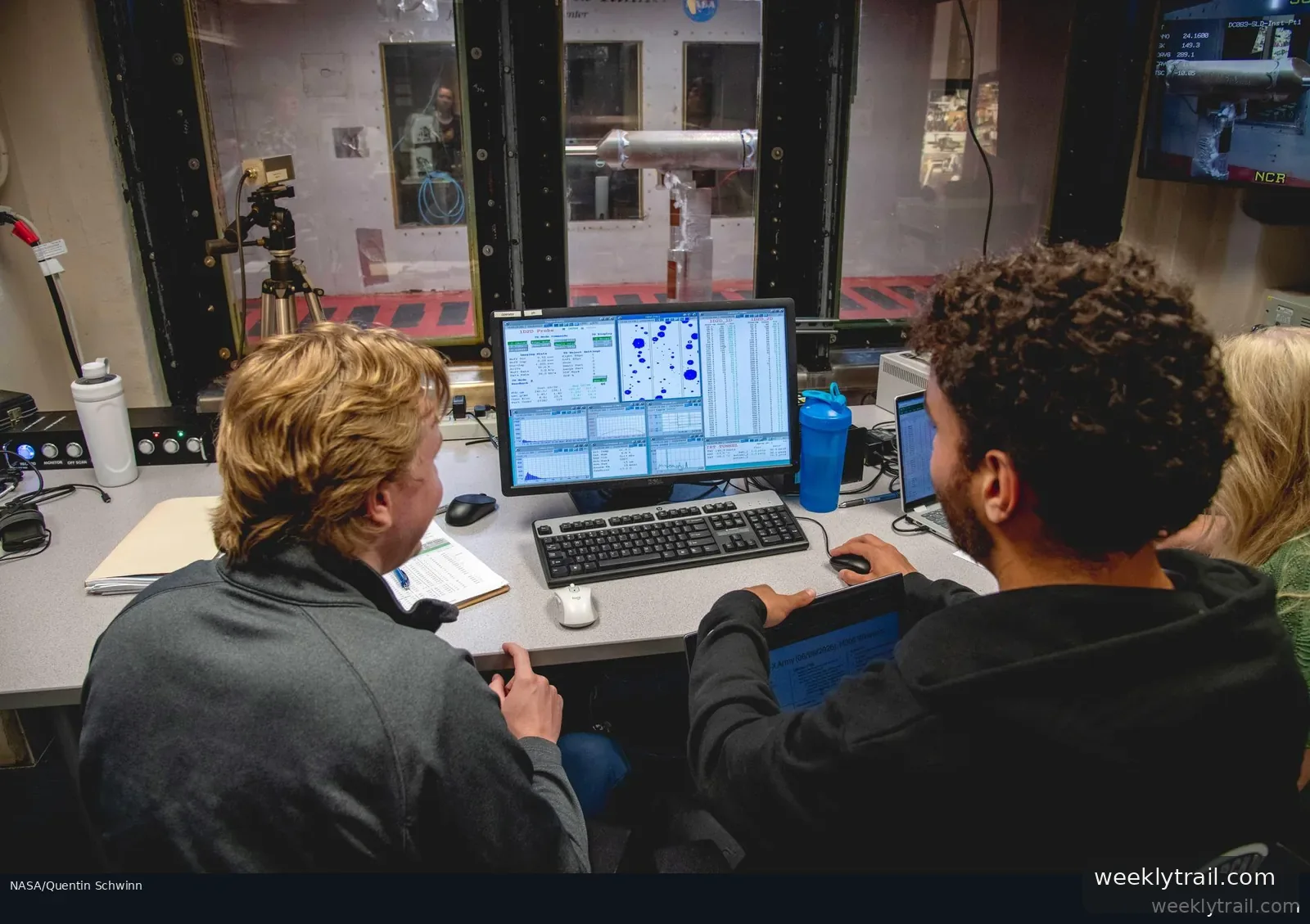
NASA is using its Icing Research Tunnel at Glenn Research Center in Cleveland to study a rare but persistent aviation hazard: icing caused when aircraft fly through clouds containing unusually large water droplets that are very cold but remain liquid. Because such drops can strike or splash aft of an aircraft, including areas behind conventional ice protection systems, the agency says industry engineers have questions about how well current design tools account for the physics involved.
In a series of tunnel tests, NASA researchers tried new probes that can detect droplets larger than 45 microns and analyze their sizes in real time. The agency reported the work in an image article published October 5, 2026. It said it will compare those readings with a laborious method of post-processing droplet size image data from the tunnel, and combine the results with a separate probe measuring droplets smaller than 45 microns to establish the full droplet size spectrum.
The campaign marks a milestone for the Subsonic Flight Demonstrator project, part of NASA's Research and Technology Mission Directorate. Detailed analysis continues, and researchers plan to share results with the wider aerospace community once it is complete. The article's captions cite testing on June 8-11, 2026; tunnel photographs were credited to NASA's Quentin Schwinn.

Start the conversation. A good question is half the story.