 WeeklyTrail
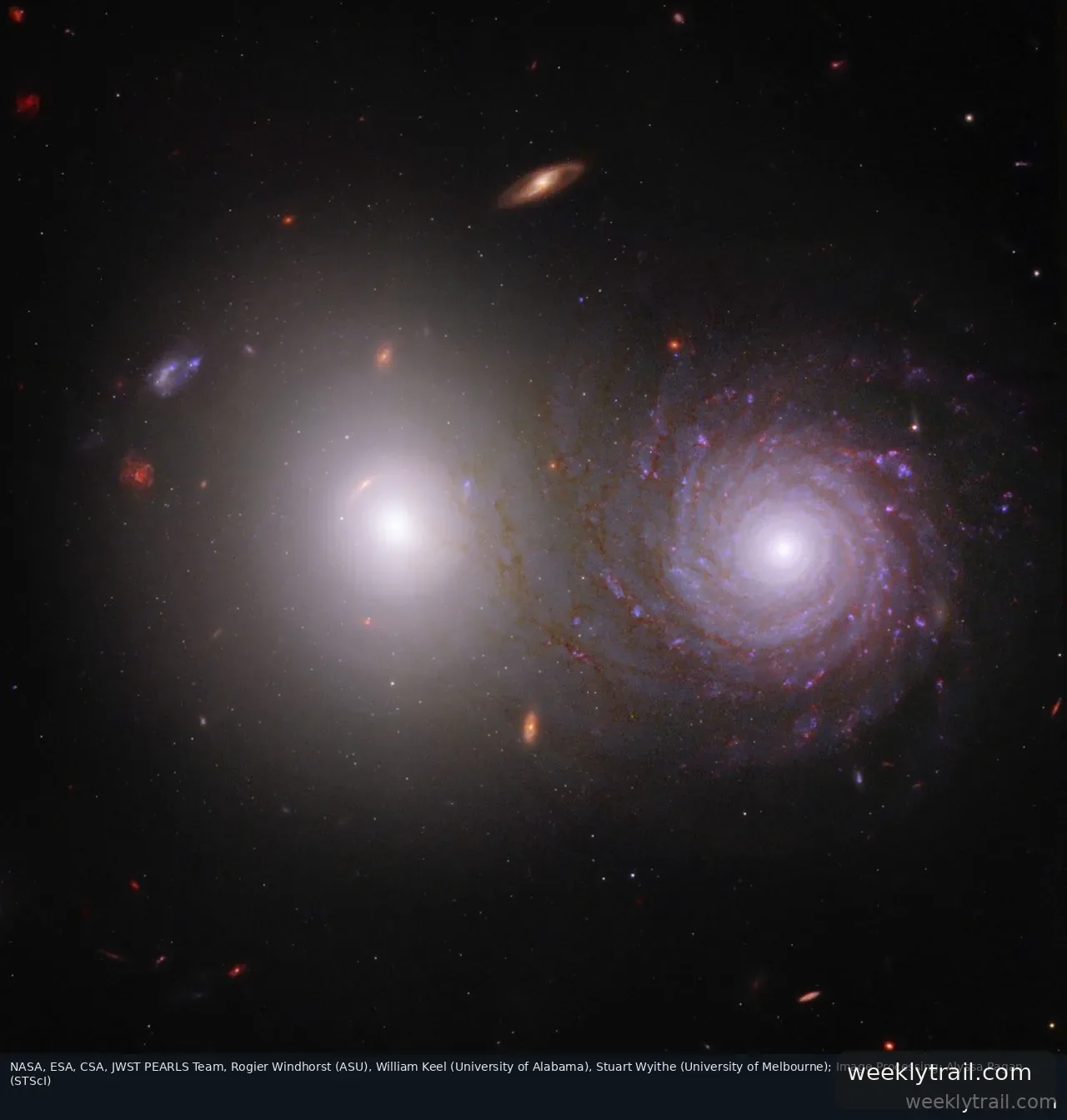
NASA announced on September 30, 2026, a new citizen-science project, Overlap Zoo, that asks volunteers to help identify overlapping galaxy pairs and the dust inside them. When two galaxies line up from Earth's viewpoint, the background galaxy acts like a cosmic flashlight shining through the nearer one, and its dust shows up as dark silhouettes that astronomers can map.
According to the agency's science team, volunteers will review images flagged by Galaxy Zoo participants as possible overlapping galaxies. The project teaches classifiers how to verify a pair, classify each galaxy's key features and mark its outlines, with no prior experience required. Project lead Trevor Butrum, a graduate student, said the growing volume of galaxy observations makes it increasingly difficult for astronomers to classify every candidate pair, and volunteer help is valuable for building the largest and cleanest catalog for further analysis.
The organizers say the resulting catalog would support dust studies and help refine estimates of distances to faraway objects. NASA cites the pair VV191a/b, imaged with the James Webb Space Telescope, as a prime example of the phenomenon.


Start the conversation. A good question is half the story.