 WeeklyTrail
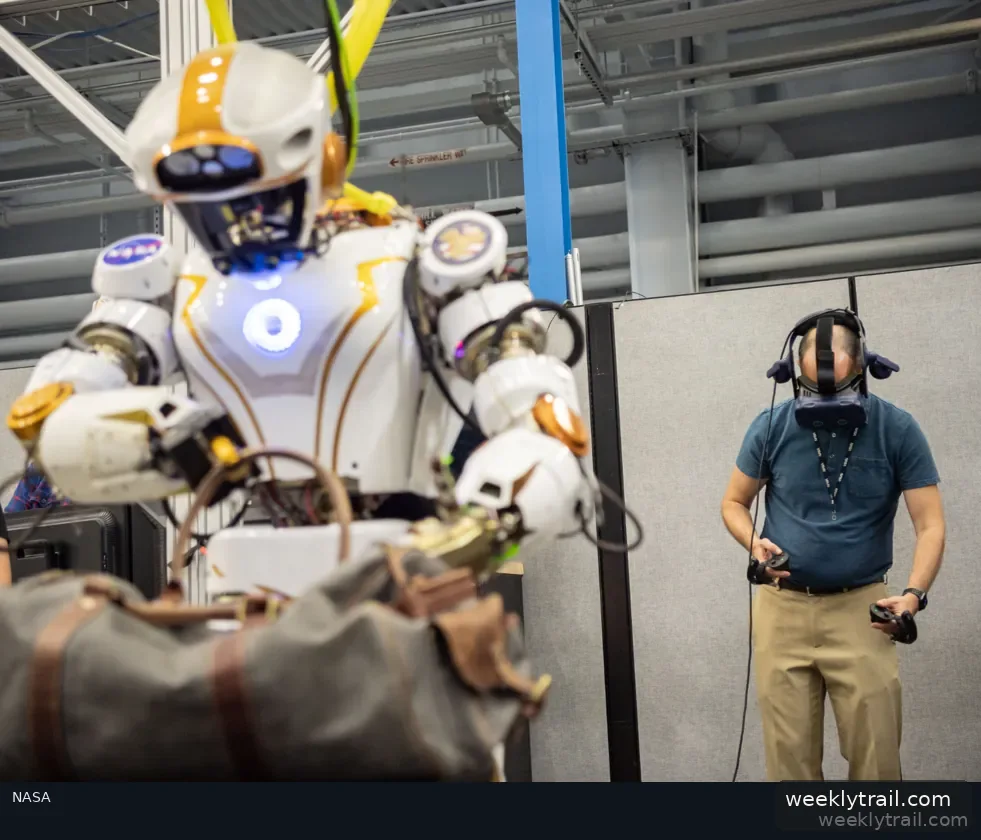
A 16-member team at NASA's Johnson Space Center in Houston is developing robots designed to perform tasks humans do with their hands, aiming to make human space exploration safer and more sustainable. In an article published September 28, team lead Shaun Azimi said the group is not trying to replace human explorers but to build capable, reliable and trustworthy robots for extreme environments.
The Dexterous Robotics Team is part of NASA's Robotic System Technology Branch and is generally split into mechatronics and software subgroups, though most members have experience in both hardware and software. Much of that experience came from work on Robonaut 2, which took part in robotics demonstrations aboard the International Space Station for seven years, and Valkyrie, NASA's first bipedal humanoid robot.
A major focus has been the Integrated Mobile Evaluation Testbed for Robotics Operations, or iMETRO, at Johnson. The facility offers open-source software and simulation assets, space vehicle and habitat mockups, house robots and an outdoor rock yard, and is available to NASA programs and external partners. Azimi said the team's near-term emphasis is on technologies supporting a sustained human presence on the lunar surface, with applications for future Mars missions as well. The team is also collaborating on a forthcoming NASA challenge inviting public ideas for Mars exploration technology.


Start the conversation. A good question is half the story.