 WeeklyTrail
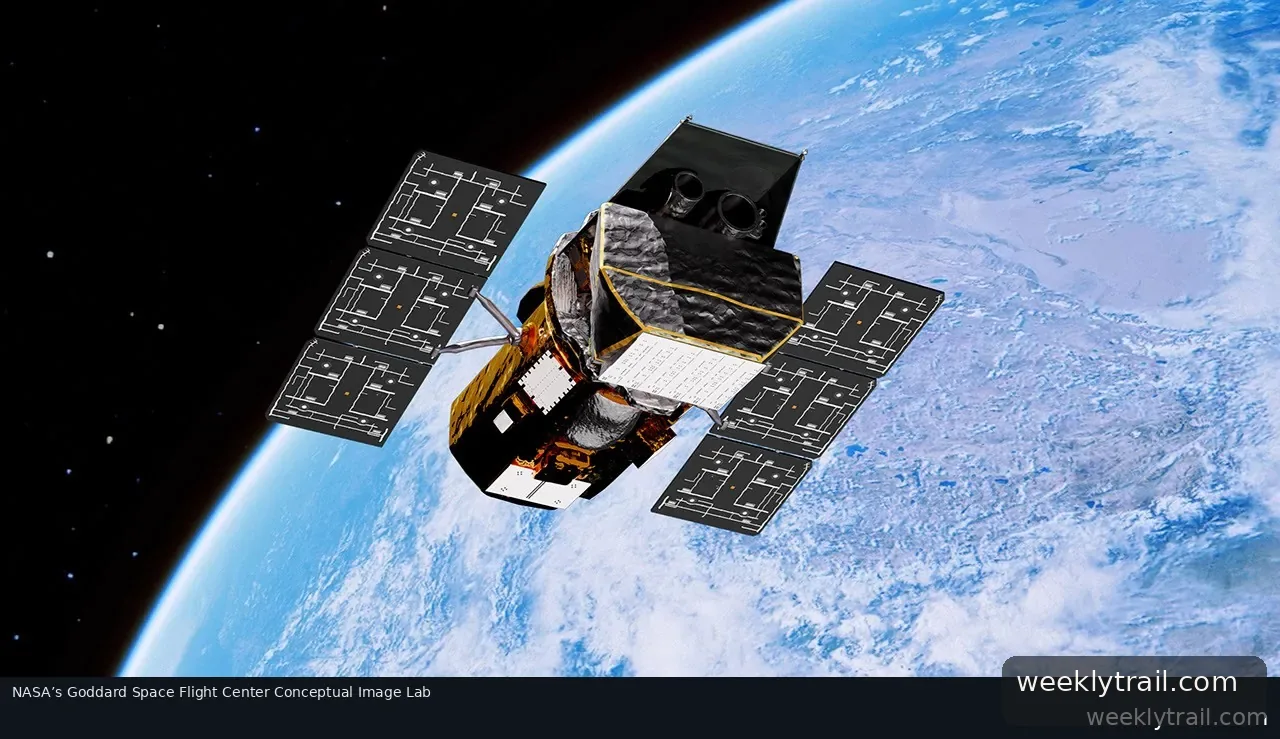
A commercial mission to boost NASA's Neil Gehrels Swift Observatory concluded without raising the spacecraft's orbit, NASA said in a Sept. 28, 2026, account of the effort. The agency and its industry vendor, Katalyst Space, said the attempt produced experience expected to benefit future in-space servicing programs.
Swift, launched in November 2004 to study gamma-ray bursts, faced a gradual decline in altitude from atmospheric drag, intensified by a period of increased solar activity. NASA predicted the observatory would sink to an altitude of around 185 miles (300 kilometers) in fall 2026, a point of no return. In September 2025, NASA contracted Flagstaff, Arizona-based Katalyst to design, build, test and launch a satellite within about one year.
Katalyst's LINK spacecraft launched in July 2026 aboard a Northrop Grumman Pegasus XL rocket from Kwajalein Atoll in the Republic of the Marshall Islands. After initial checkouts, LINK suffered intermittent communications losses and orientation-control problems. NASA and Katalyst scaled back the mission to technology demonstrations rather than grabbing or boosting Swift. NASA concluded its involvement on Sept. 3, and the spacecraft re-entered the atmosphere on Sept. 25. Meanwhile, flight controllers at Penn State adjusted Swift's pointing to limit drag and preserve altitude, work NASA said bought the boost mission valuable time.


Start the conversation. A good question is half the story.