 WeeklyTrail
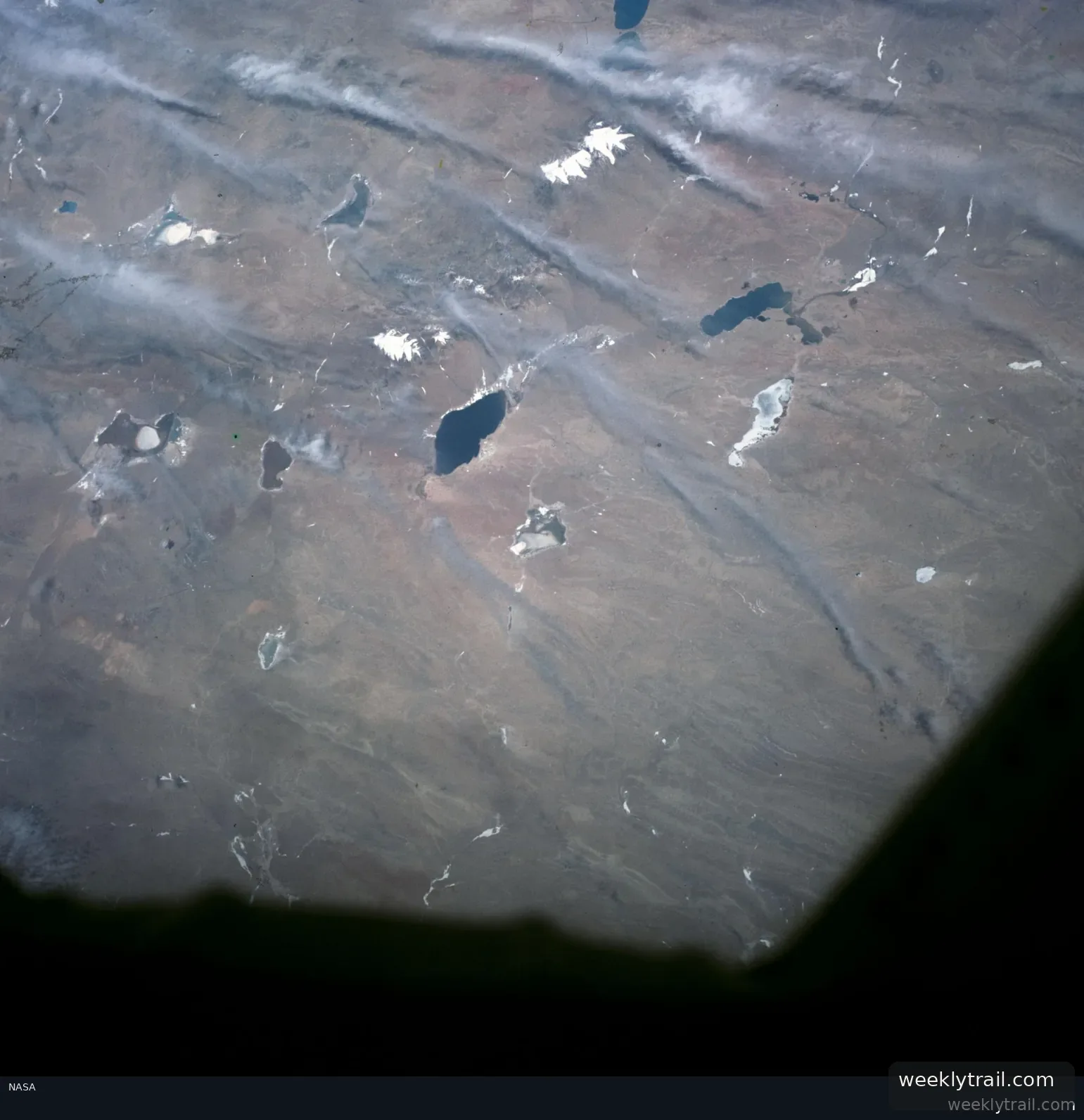
A NASA History Office article published Aug 20, 2026 recounts the visual acuity experiments flown on the Gemini V and Gemini VII missions. The work followed reports by Mercury astronauts, including L. Gordon Cooper Jr., who said during his May 1963 Mercury-Atlas 9 flight that he could see vehicles on dirt roads and the tops of houses while orbiting about 100 miles up. Some vision experts doubted such detail was possible, and the article notes that some psychiatrists at the time speculated weightlessness was causing hallucinations.
NASA and its partners developed two experiments. One used a binocular-like in-flight device in which subjects identified the orientation of rectangles at varying contrast. The other used ground-based "Eye-Q" charts of white rectangles roughly 150 to 600 feet long, made by the Dow Chemical Corporation and placed on dark tilled soil near Laredo, Texas, and near Carnarvon, Australia. Clouds, window glare and orbital orientation limited views, but on some revolutions crews on both missions saw parts of the Laredo site. The article states the results showed astronauts could see roads and ships with following wakes from orbit, and that vision did not deteriorate during a two-week spaceflight.
The article links this work to later Earth observation, including the 1972 launch of the Earth Resources Technology Satellite, later renamed Landsat 1. A footnote says scientists have since documented that roughly 70% of astronauts experience Spaceflight Associated Neuro-ocular Syndrome during longer spaceflights.

No comments yet.