 WeeklyTrail
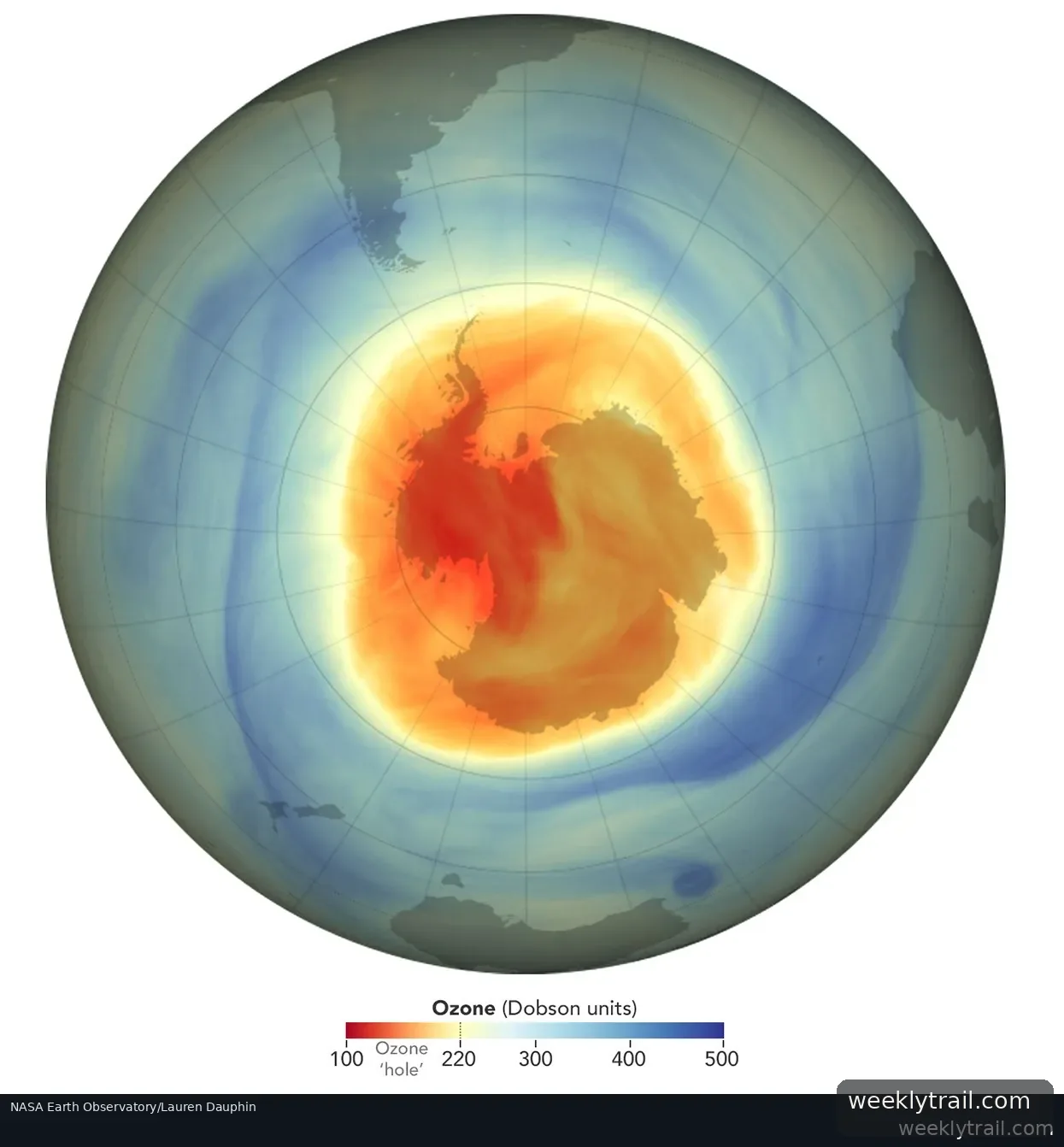
NASA and NOAA reported that the 2026 Antarctic ozone hole ranked seventh largest by area in 48 years of monitoring, though it was not as deep as other large holes on record. During the peak depletion season from Sept. 7 to Oct. 13, the hole averaged about 9.6 million square miles (25 million square kilometers), reaching a one-day maximum of 10.5 million square miles (27.1 million square kilometers) on Sept. 18.
Scientists attributed the large area partly to an unusually powerful polar vortex that kept cold conditions in place and extended ozone depletion. NOAA balloon measurements at the South Pole found ozone concentrations reached their lowest yearly value of 105 Dobson units on Oct. 17, compared with the lowest recorded value of 92 Dobson units in October 2006. Researchers said the hole could have been 1 to 2 million square miles (3.5 million square kilometers) larger if ozone-depleting substances were as prevalent as at their peak in 2000.
NASA and NOAA said monitoring shows that controls under the 1987 Montreal Protocol continue to drive long-term recovery, with chlorine levels in the Antarctic stratosphere down about a third from 1980s levels. Scientists estimate the ozone hole will recover by the 2070s.


Start the conversation. A good question is half the story.