 WeeklyTrail
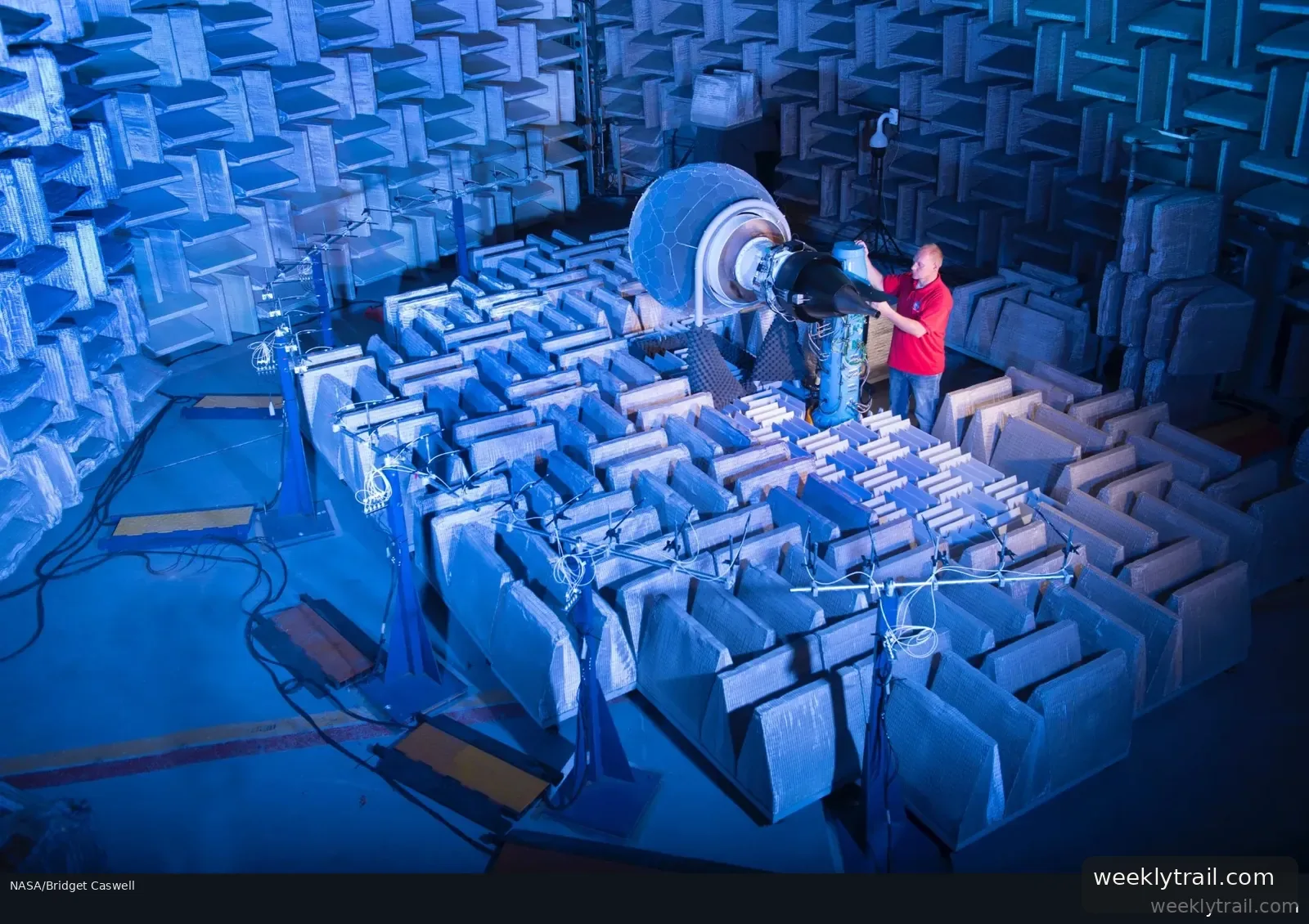
NASA's Glenn Research Center has published an overview of six experimental facilities used to study aircraft engine aerodynamics and acoustics, including wind tunnels, jet rigs and test chambers.
The 9- by 15-Foot Low Speed Wind Tunnel studies engine aerodynamics and acoustics at takeoff and landing conditions, and major modifications completed in 2019 improved flow and lowered background noise. The Aero-Acoustic Propulsion Laboratory, a 65-foot radius geodesic dome built in 1993, contains 17,000 fiberglass wedges that absorb sound; it houses the Small Hot Jet Acoustic Rig, the Nozzle Acoustic Test Rig and the DGEN Aero-propulsion Research Turbofan. The small rig tests single-stream nozzles up to 5 cm in diameter, Mach 2.0 and 800 K, and researchers there have developed flow measurement techniques.
The Nozzle Acoustic Test Rig simulates flight conditions up to Mach 0.35 and, according to the overview, was where chevron nozzles were first identified during a NASA-led test campaign in 1997. Tests on the turbofan were completed in August 2019. The Acoustical Testing Laboratory has been used to measure noise from electric motors, International Space Station experiments and a scale model of a supersonic engine inlet.

Start the conversation. A good question is half the story.