 WeeklyTrail
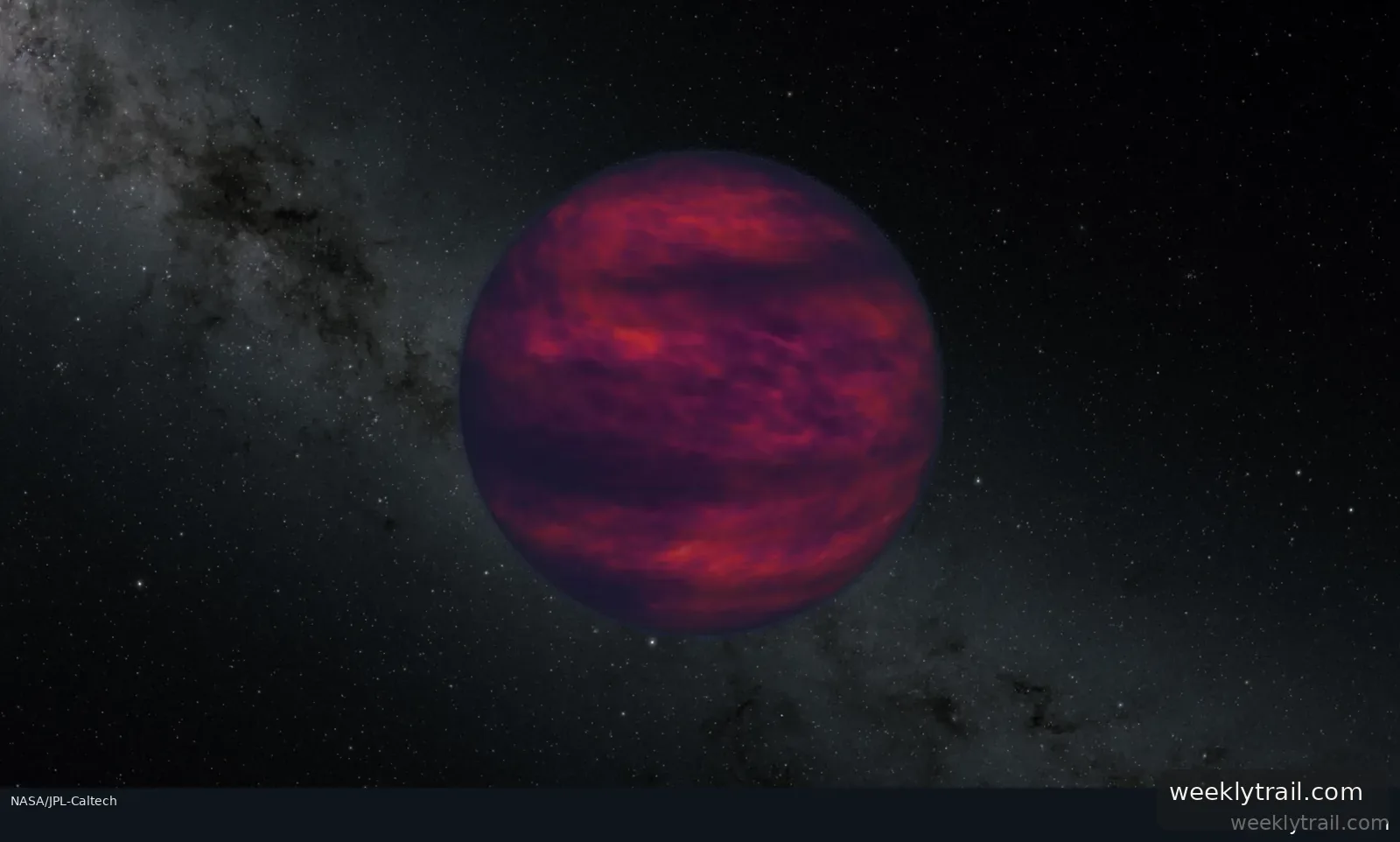
NASA's SPHEREx space telescope is finding thousands of brown dwarfs as it maps the sky, according to findings published in The Astrophysical Journal. Brown dwarfs form from collapsing clouds of gas like stars but are not massive enough to sustain hydrogen fusion in their cores, and they glow dimly while drifting without a host star.
A study analyzed SPHEREx observations of 37 nearby brown dwarfs spanning temperatures from about 4,000 to minus 10 degrees Fahrenheit (2,200 to minus 20 degrees Celsius). The telescope measured their brightness in 102 colors spanning deep red to infrared light, revealing atmospheres harboring water, carbon dioxide, carbon monoxide and methane. "No two brown dwarfs are alike," said lead author Zafar Rustamkulov of IPAC at Caltech, noting that spectra differ even at the same temperature. Coauthor J. Davy Kirkpatrick said the team is still analyzing thousands more. Only a few dozen brown dwarfs had previously been studied in detail with space-based telescopes.
Spotting brown dwarfs is a side project for SPHEREx, which takes about 3,600 unique images per day to build all-sky maps. The mission launched in March 2025 and is managed by NASA's Jet Propulsion Laboratory. Its data is freely available to scientists and the public.


Start the conversation. A good question is half the story.