 WeeklyTrail
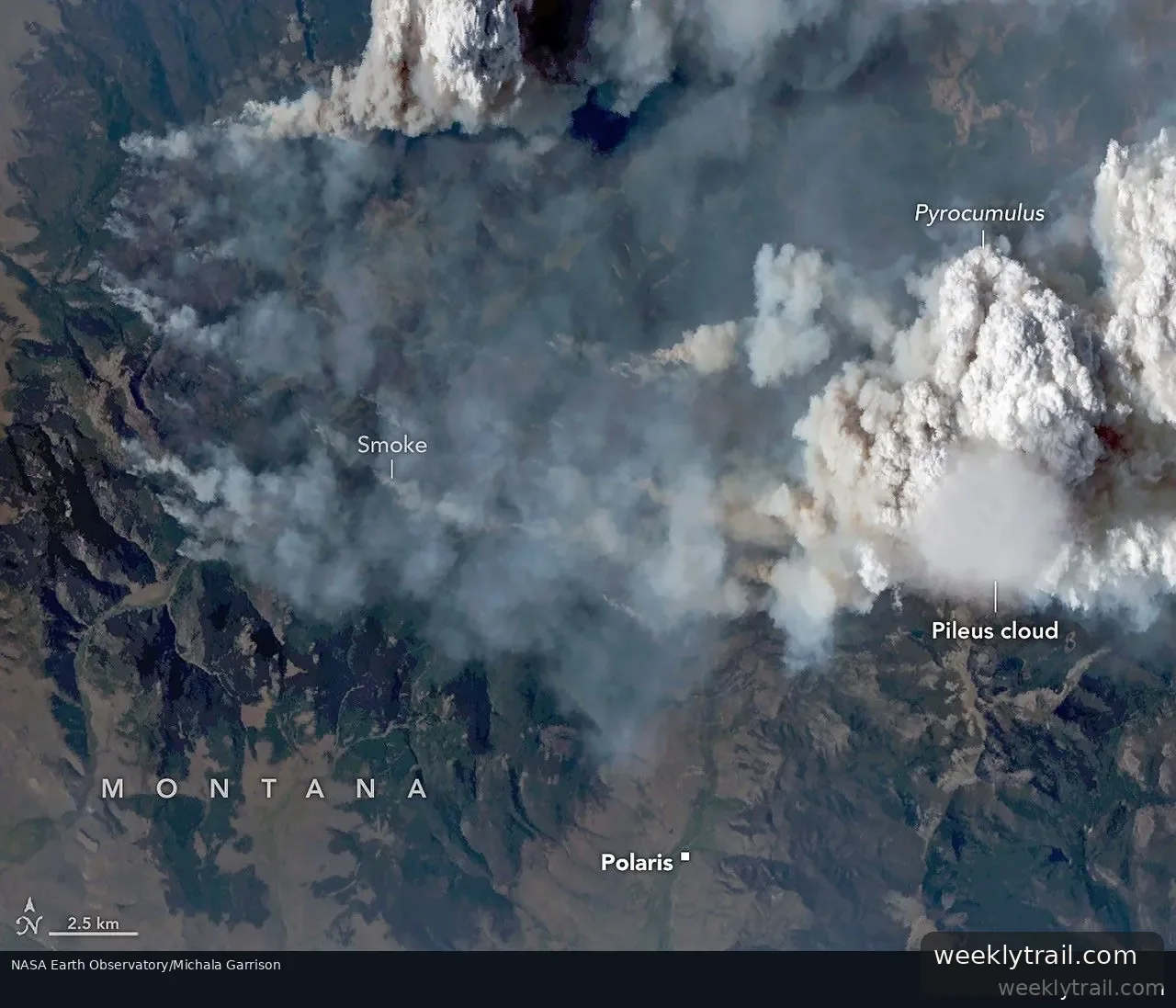
An Earth Observatory report published September 29, 2026, described rare observations of an ephemeral pileus cloud above a smoke-infused cloud rising from the Sand Creek fire in Montana. The images were captured on August 11, 2026, at 5:40 p.m. local time (23:40 UTC) by the MASTER instrument on one of NASA's ER-2 research aircraft, during a flight for NASA's INSPYRE campaign.
Pileus clouds typically form when rising air meets a moist layer aloft. Over the fire, a fast-rising updraft displaced a horizontal layer of moister air upward, which cooled and condensed into the veil-like cloud. INSPYRE deputy project investigator Neil Lareau likened the process to air forced over a mountain, with the pyrocumulus itself acting as the mountain. The clouds are usually short-lived; MASTER imaged the plume roughly every 30 minutes, and the pileus appeared clearly in just one scene.
The imagery included natural-color and shortwave-infrared views, the latter revealing burned areas and active burning along the fire's perimeter. Lareau said the fire was making a rapid run up the western side of Mount Comet. He described the scene as central to INSPYRE's aims, connecting surface fire dynamics, the convective plume and cloud processes.



Start the conversation. A good question is half the story.