 WeeklyTrail
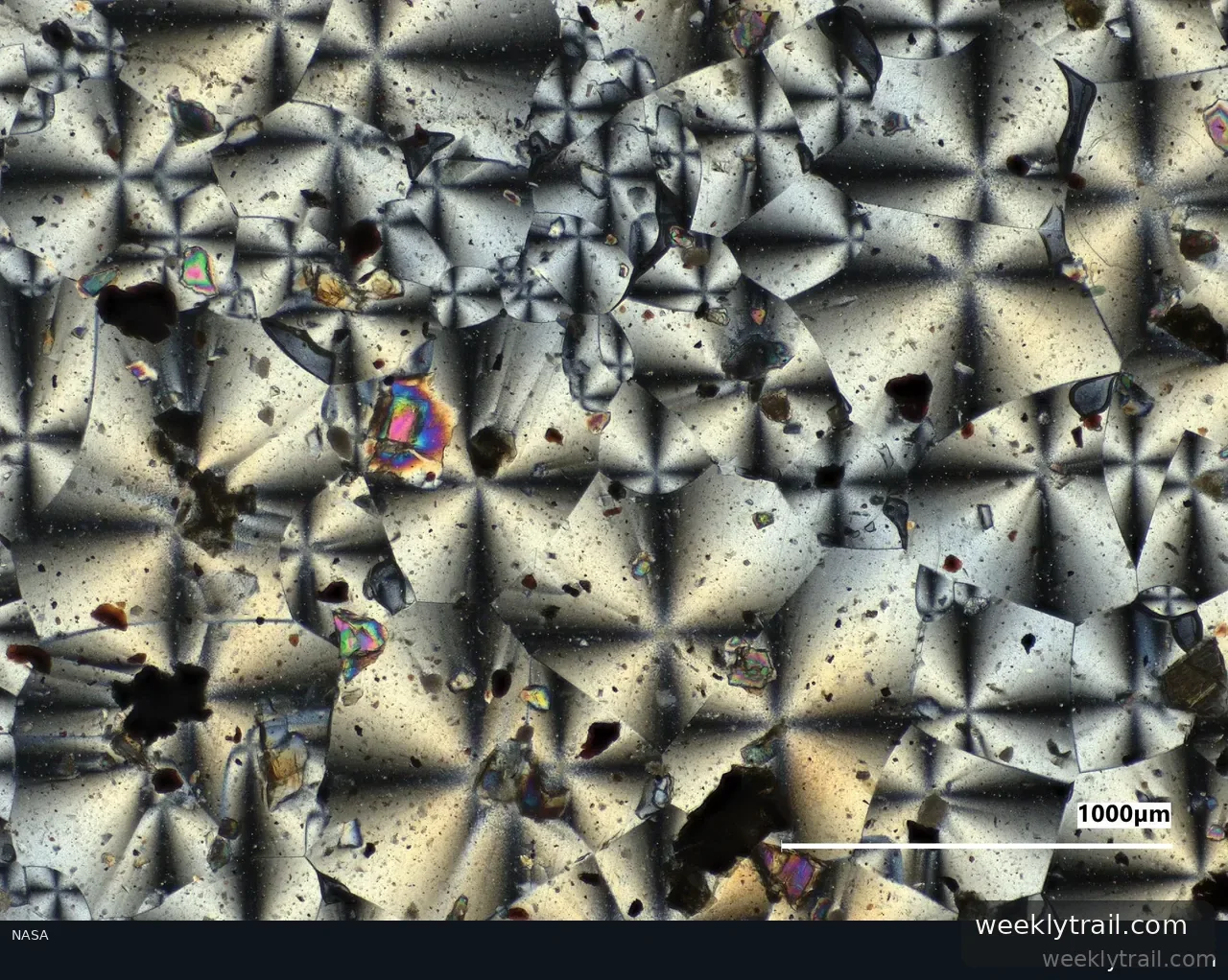
A new material developed at NASA's Glenn Research Center in Cleveland could support manufacturing during future space missions, according to a NASA image article published September 29, 2026. Photographs taken through a microscope show the material's colorful, kaleidoscope-like crystal structure.
Research chemical engineer Allison Christy and summer interns Tyler Klinchuch, Ethan Bilodeau and Emma Levenson mixed a special plastic with simulated Moon and Mars dust. The plastic is biodegradable and could be produced by bacteria fed with crew waste or carbon dioxide. The team found that adding the dust particles made the plastic stronger and easier to process, and that varying the dust type and amount adjusted its properties. The material could be used for items inside future habitats, such as structural brackets, wrenches or chairs.
Christy said crews cannot bring everything with them and would need to fix broken equipment with available resources. The team hopes to study whether the material could be used outdoors in harsh lunar or Martian conditions. Testing is underway in Glenn's Lunar Environment Structural Test Rig, and samples are slated to launch on the upcoming MISSE-23 mission for exposure outside the space station. The research is funded through NASA Glenn's 2026 Center Innovation Fund.


Start the conversation. A good question is half the story.